
Gabrielle Horn Regnault
PAPER AND MATERIALS CREATIONS


Name: Gabrielle Horn Regnault
Expertise: Paper and materials creations
Workshop founded in: 2017
Based in / Showroom address: Paris
Instagram @gabriellehornregnault
From decorative painting to precious papers:
materials, textures, volumes, and unique prints.
An exceptional craft artist, Gabrielle Regnault explores the languages of decorative and mural arts through a sensitive investigation
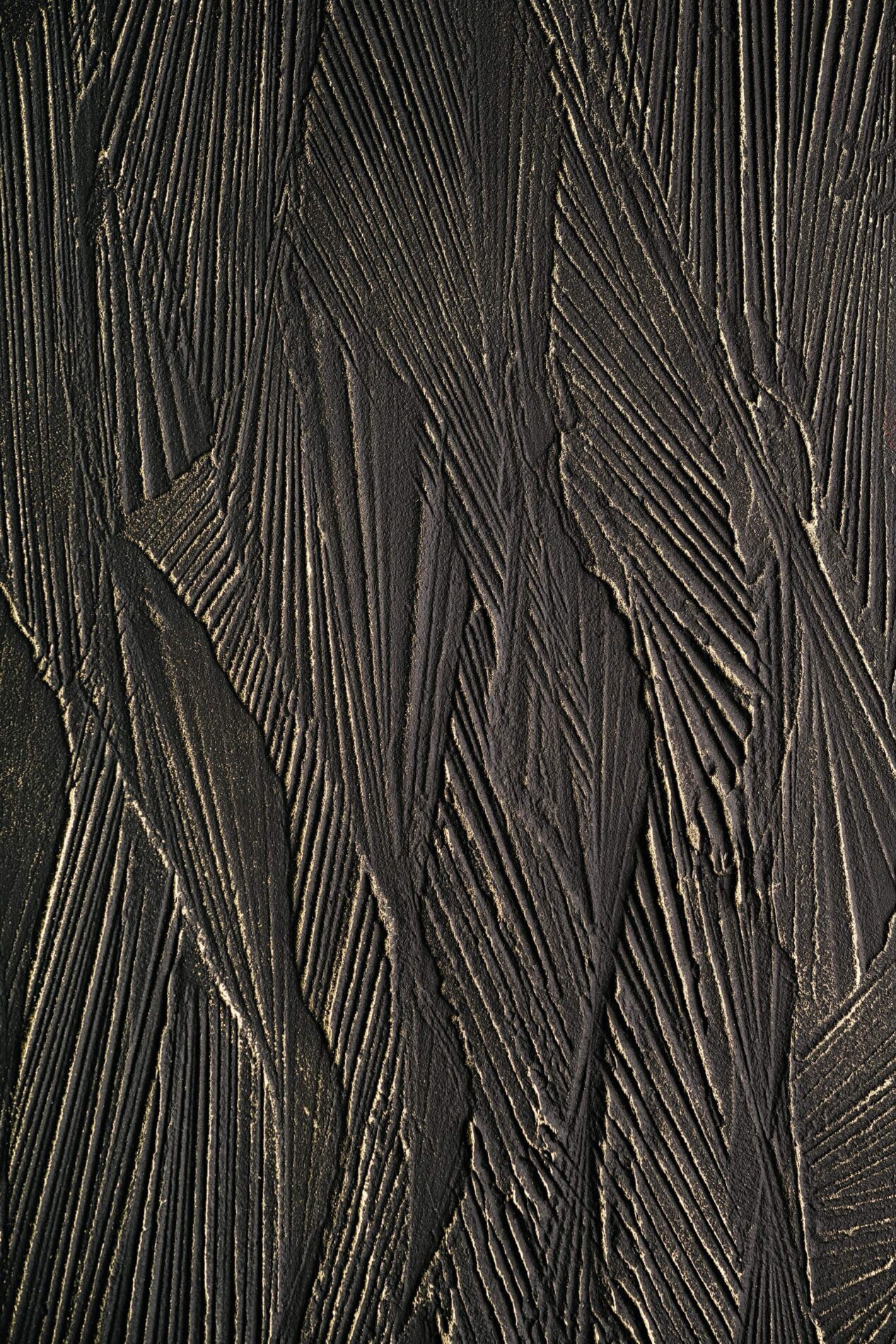
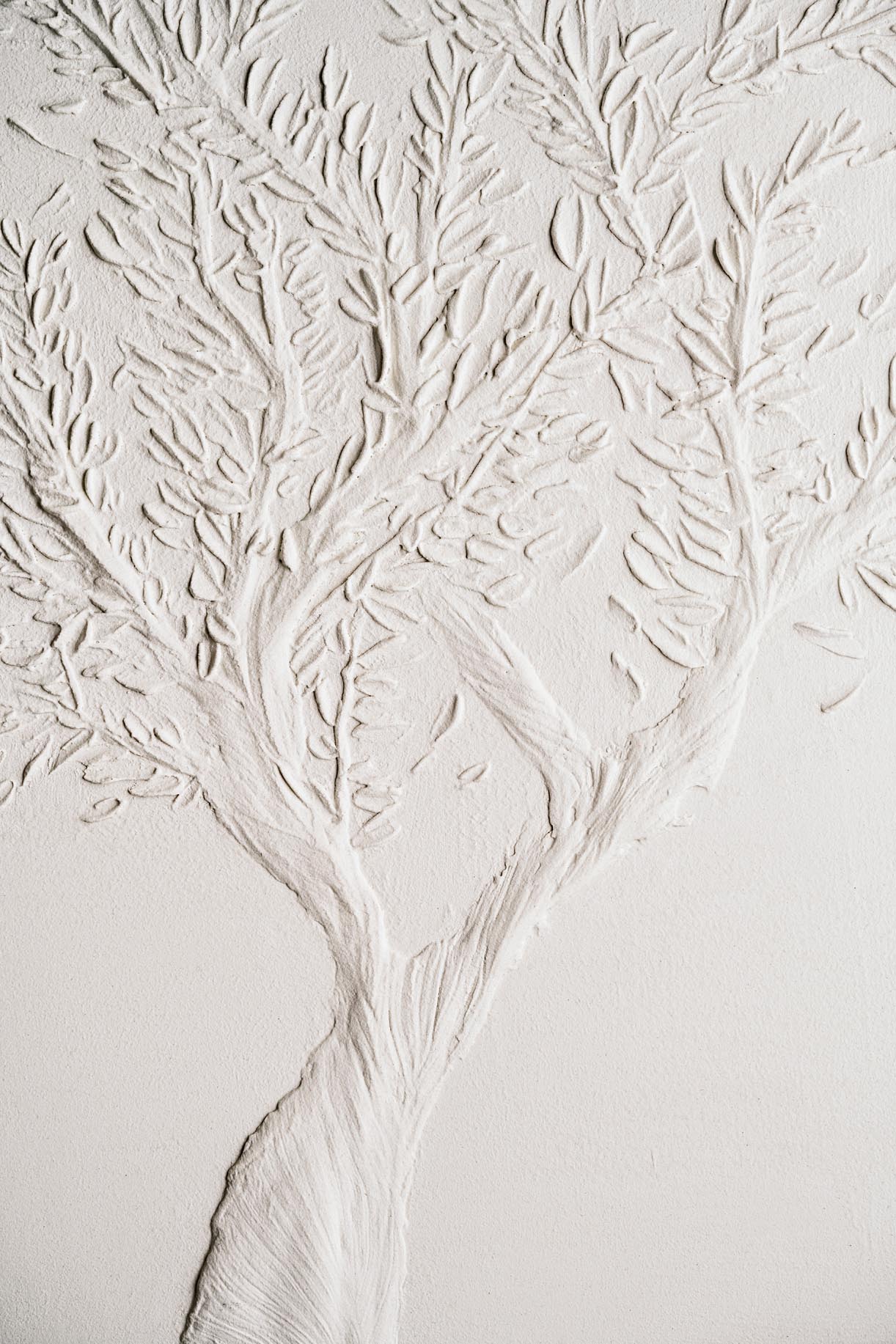
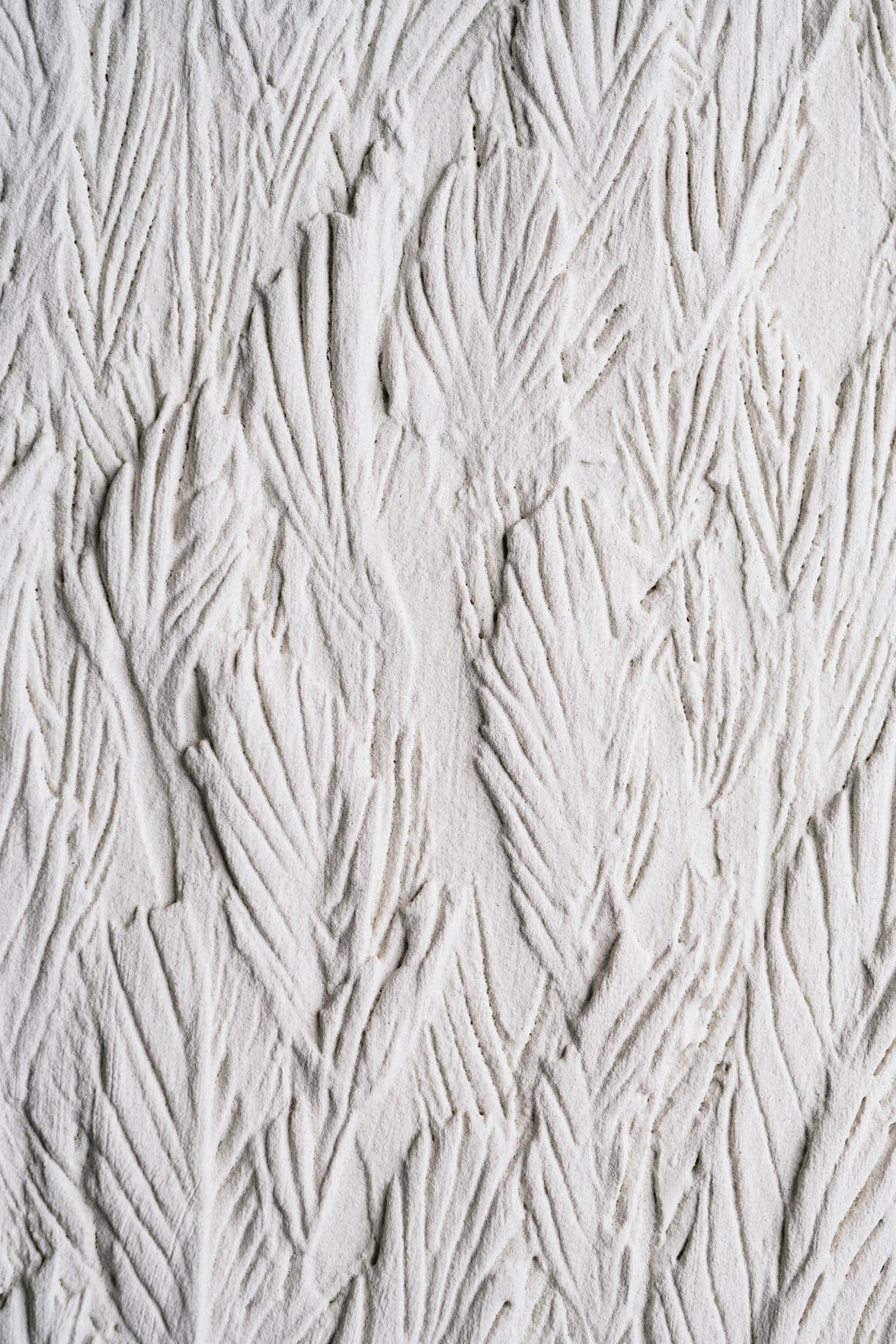
of materials and traditional craftsmanship. Working across engraving, printing techniques, embroidery on Japanese and Korean papers, sculpted and engraved plasters, and hand-printed dominoté papers, she creates bespoke wall artworks as well as refined surface treatments for furniture and lighting. Her custom-made creations blur the boundaries between art and design, revealing
compositions in which the poetry of form engages in dialogue with the richness of texture, transforming interiors
into distinctive and deeply evocative spaces.
Exploring wall wurfaces:
From bas-relief to flat surface
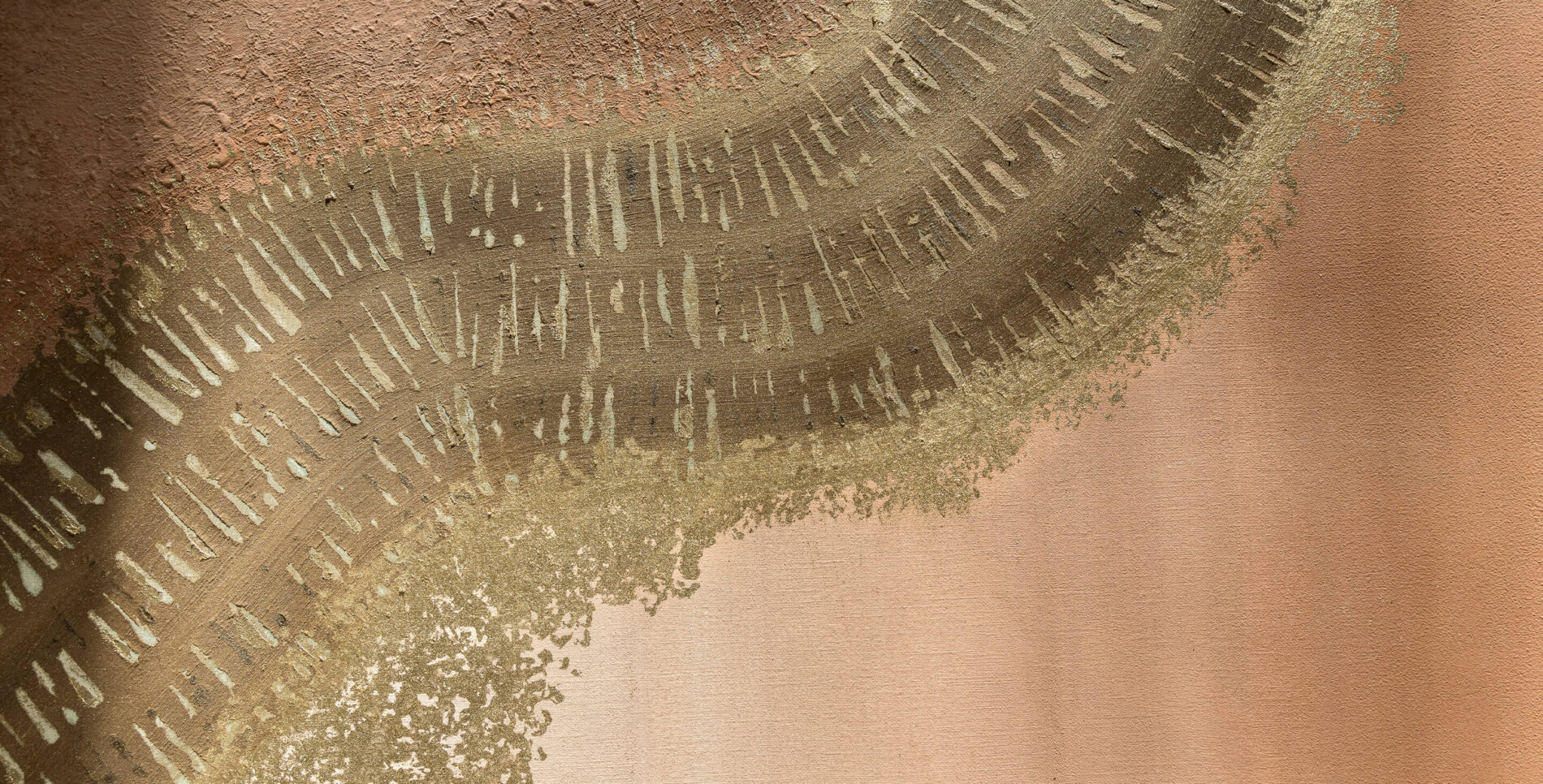
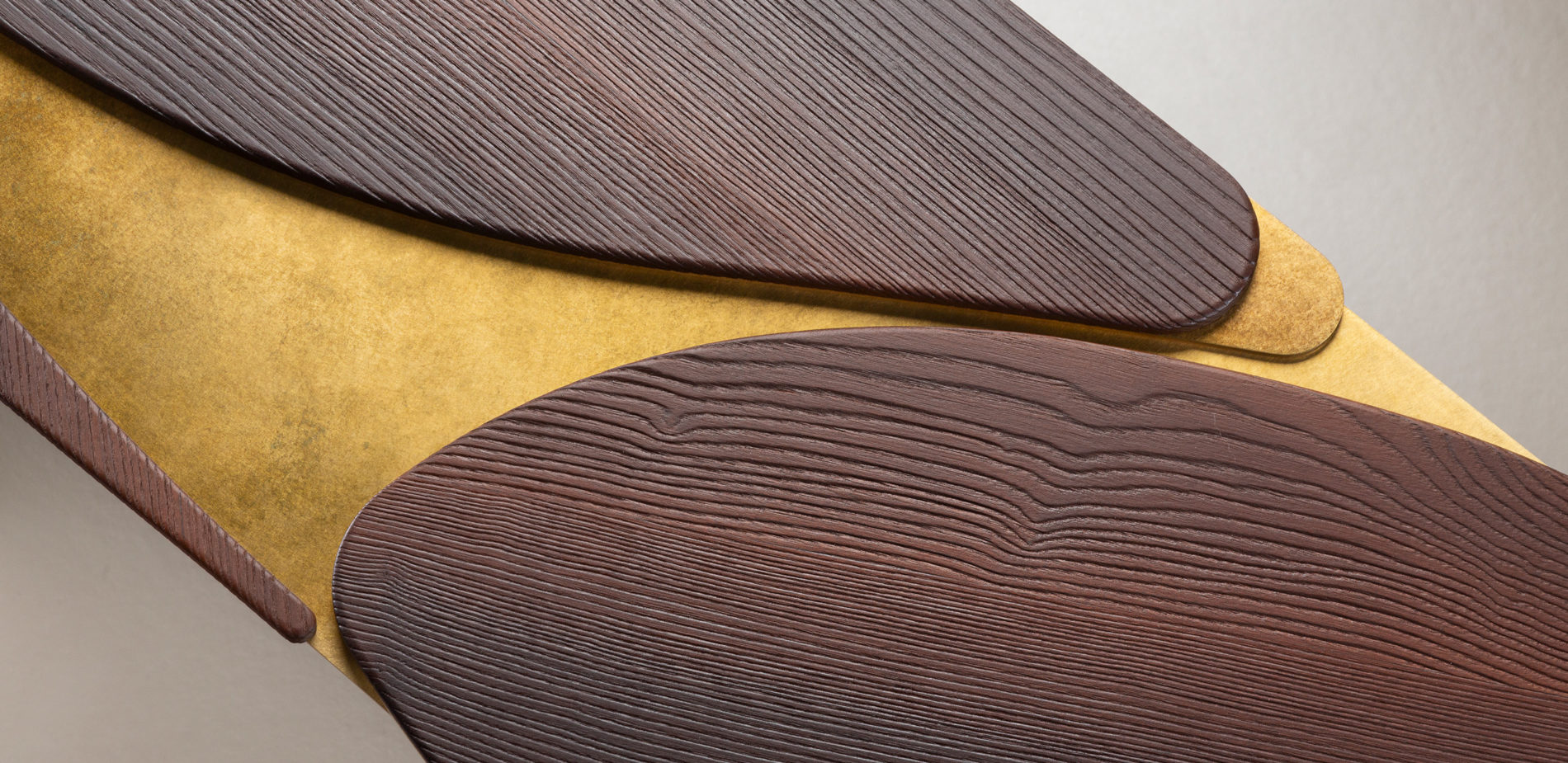
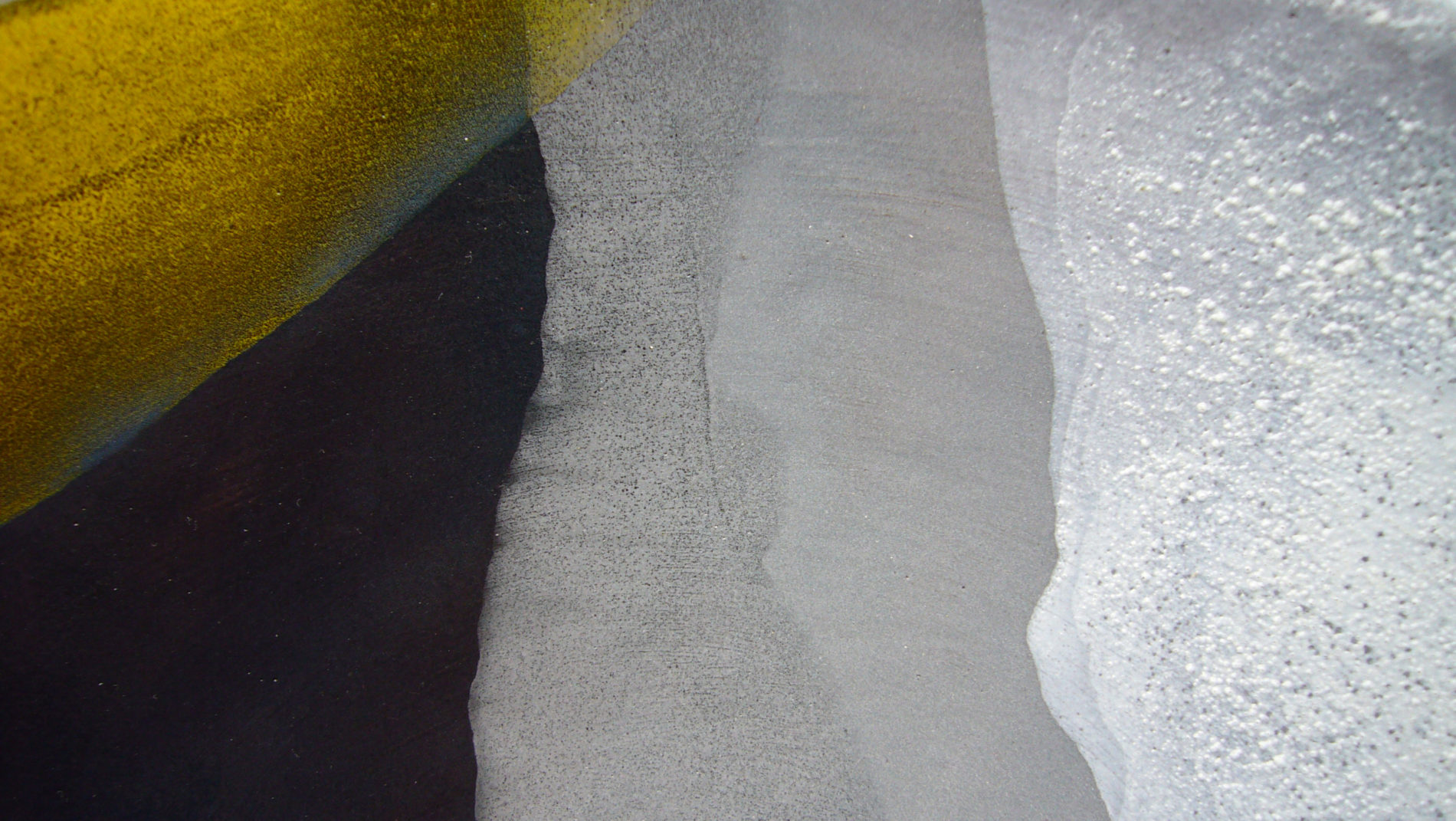
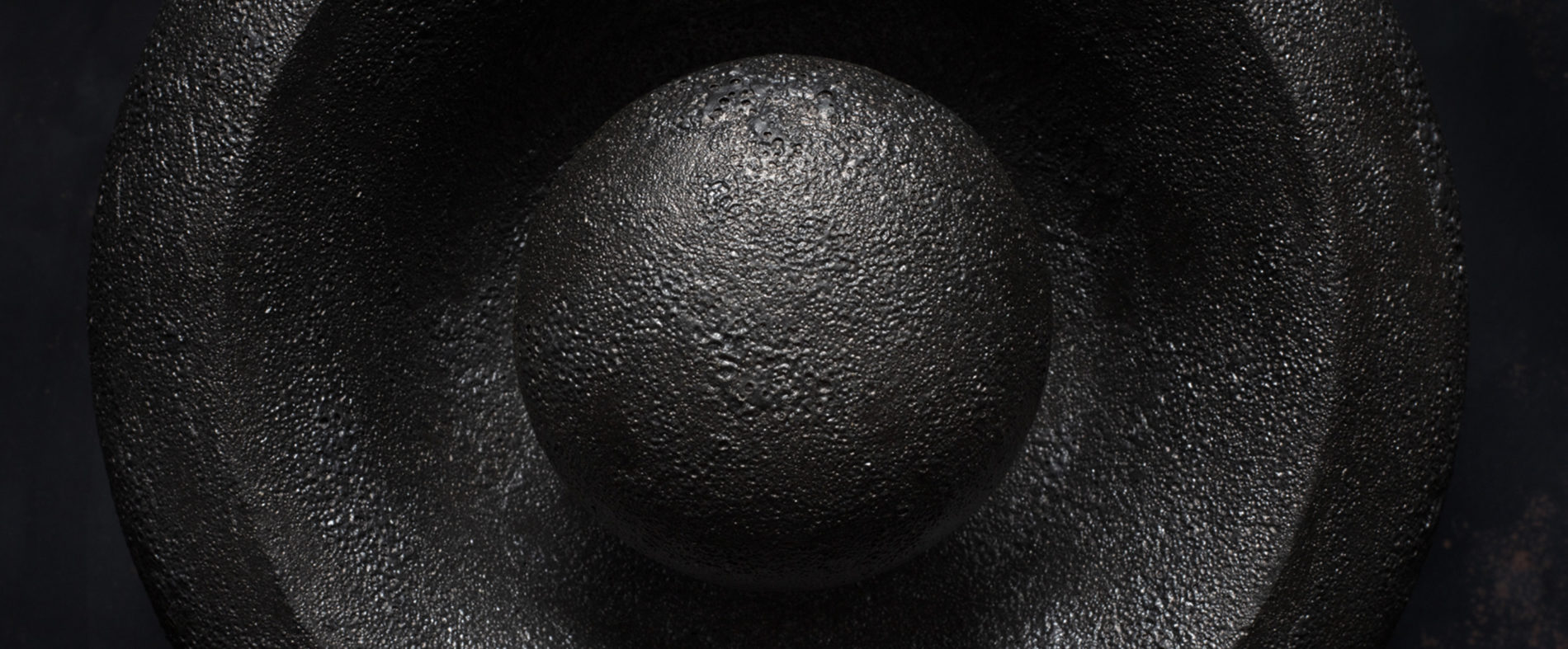
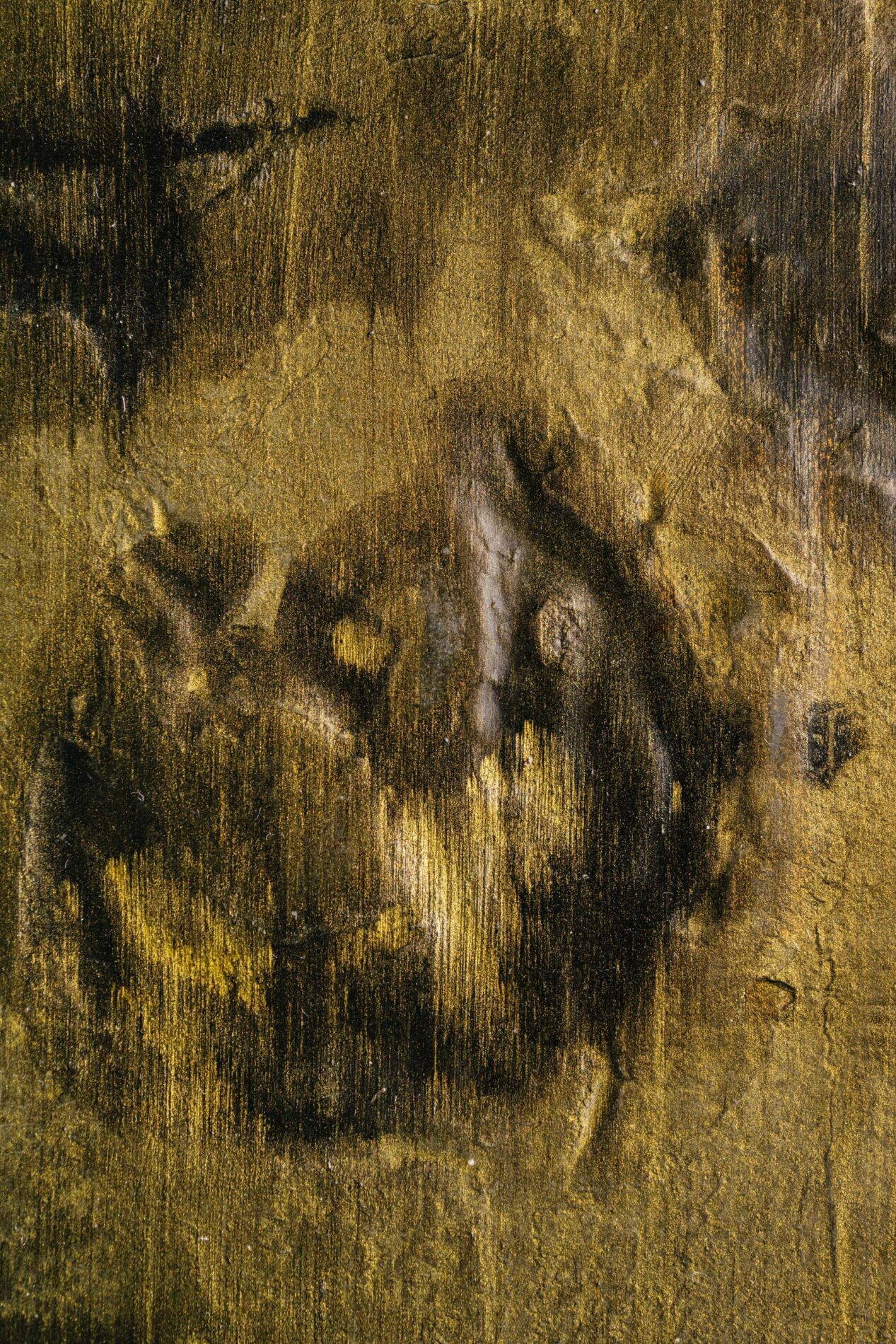
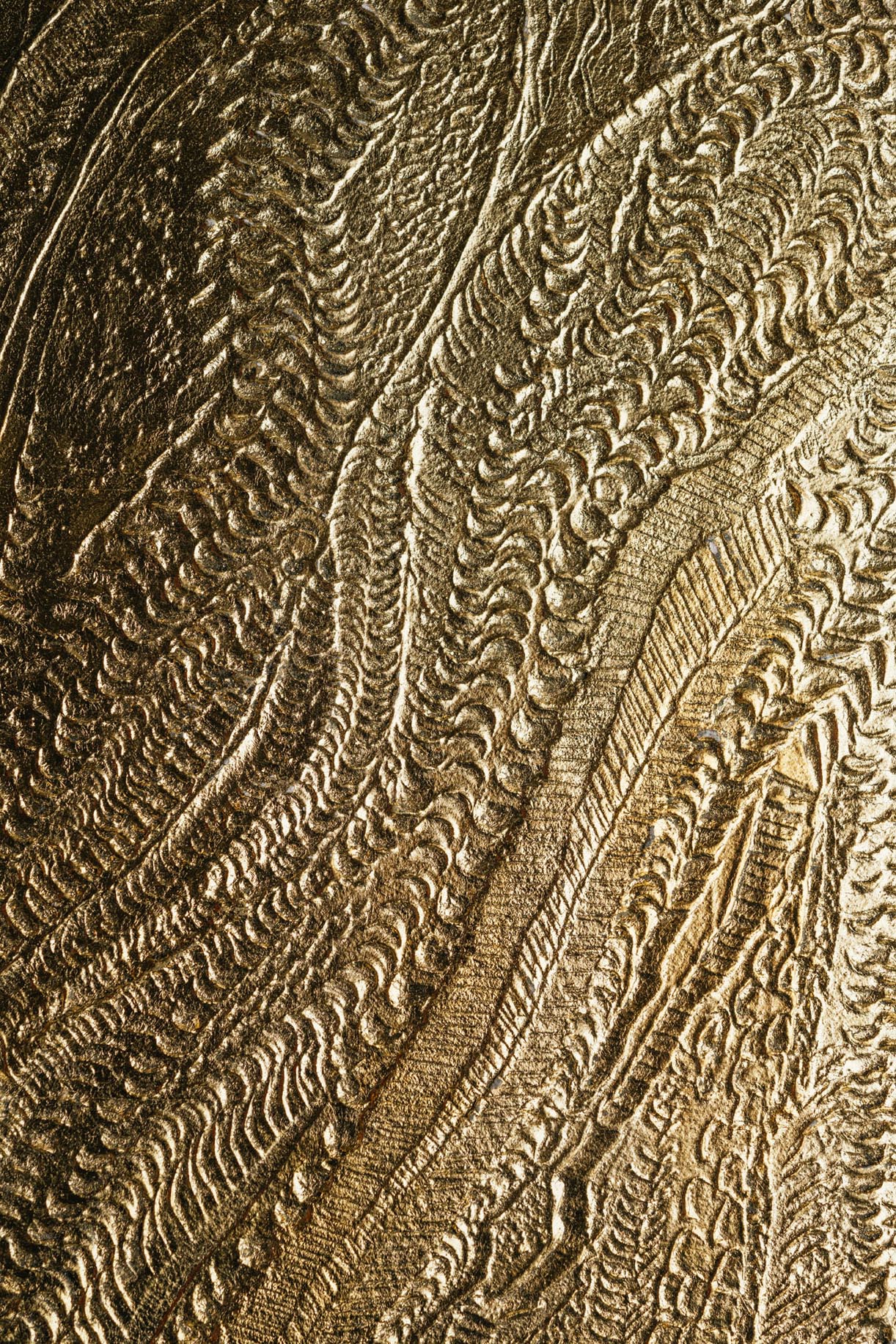
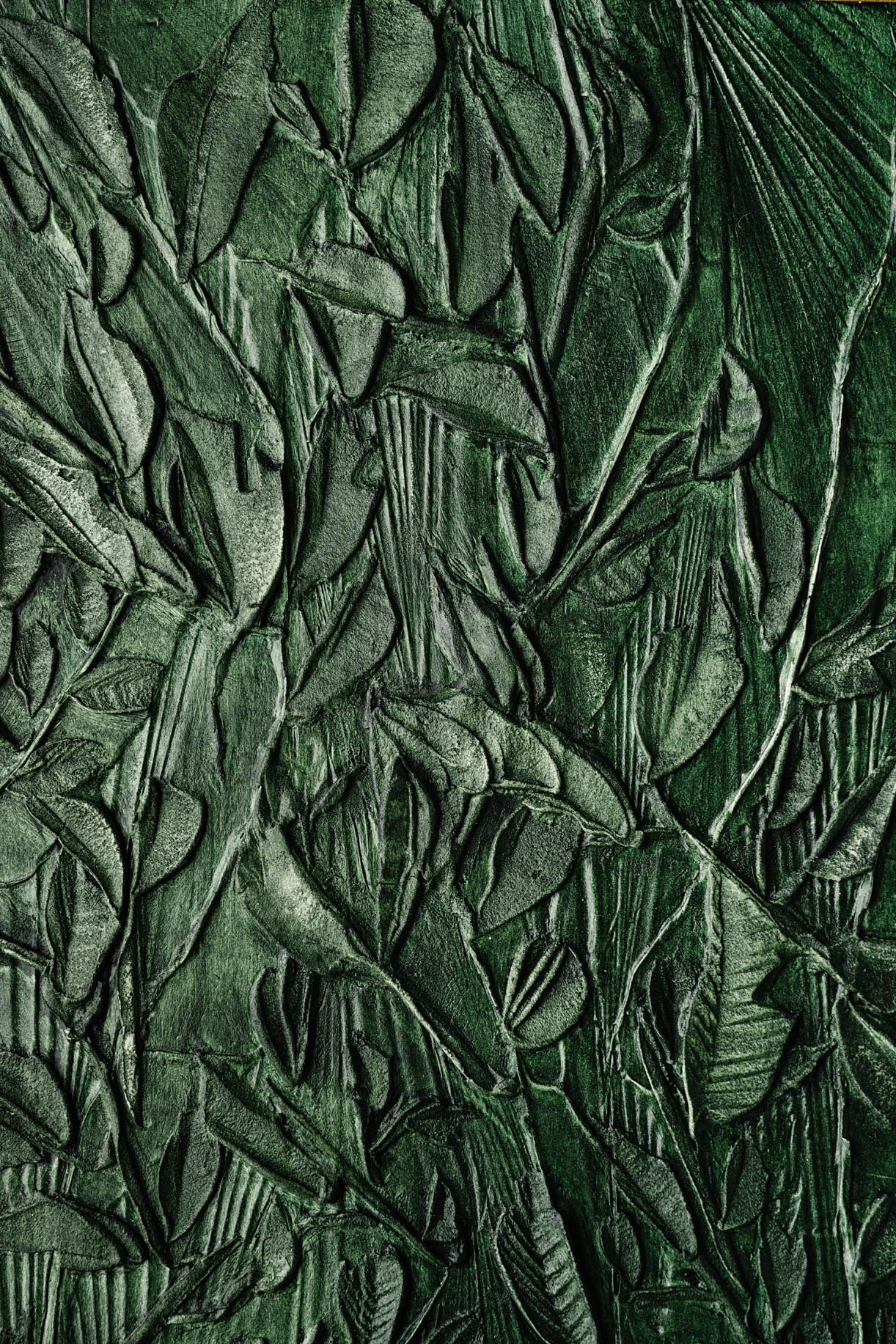
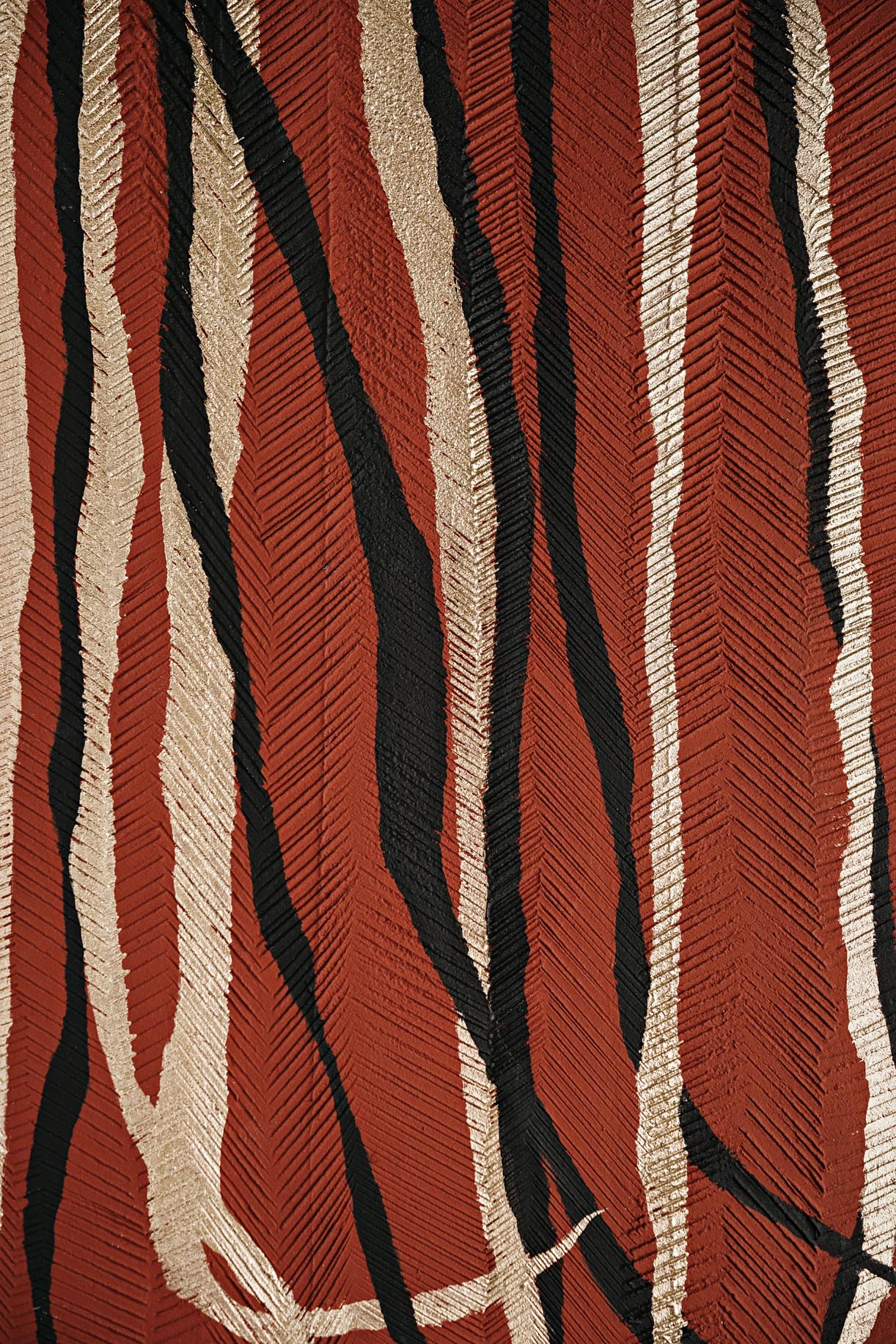
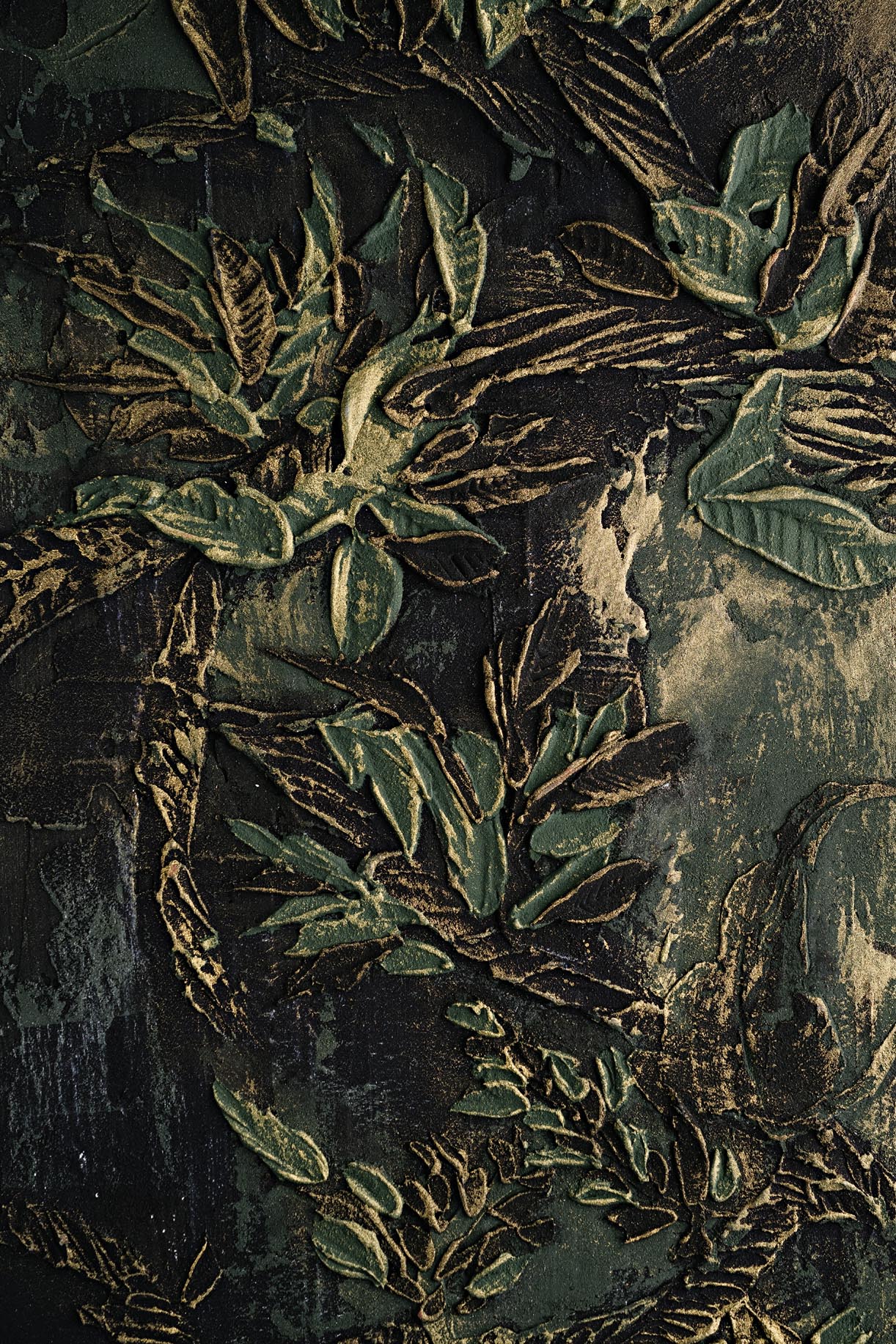
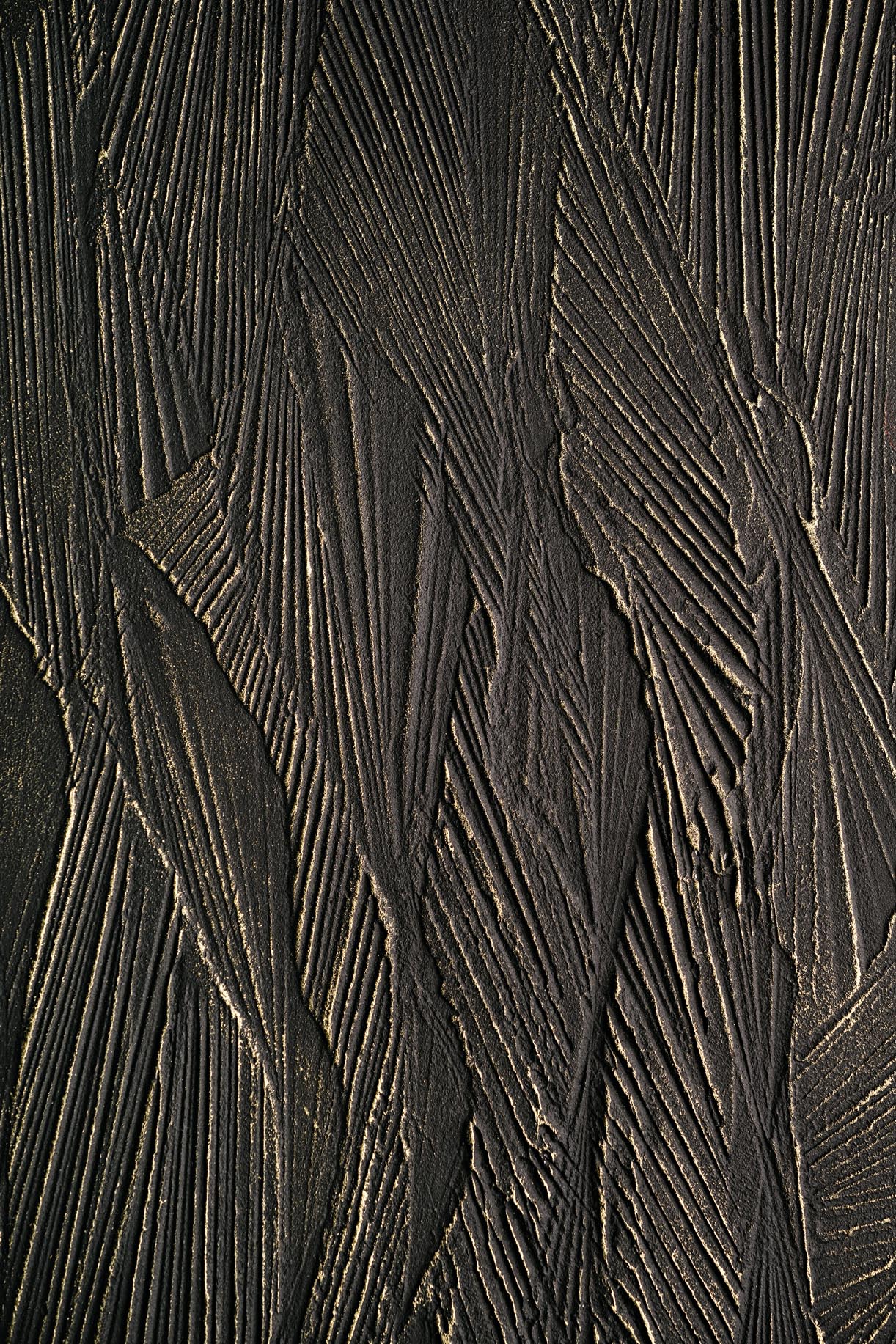
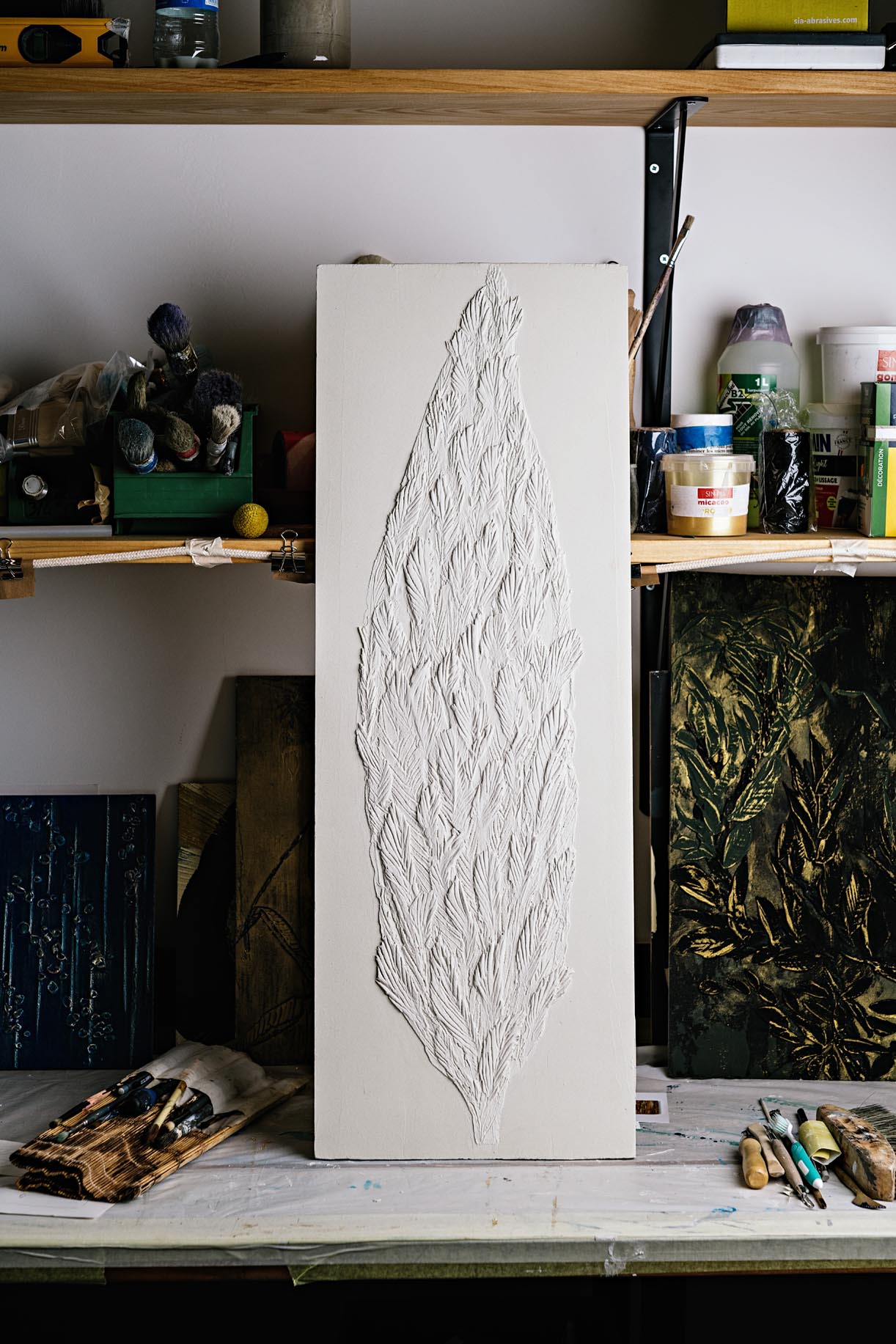
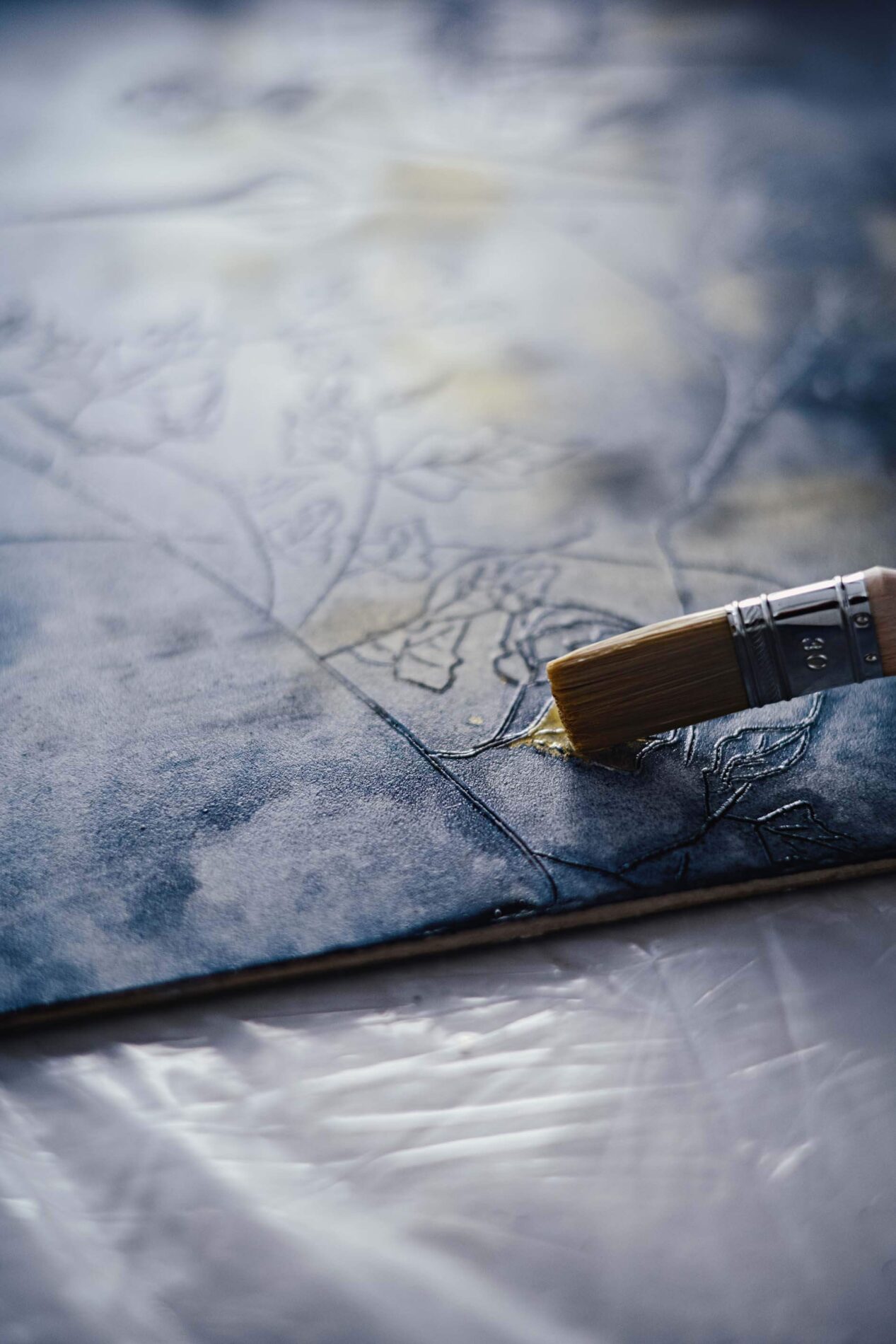
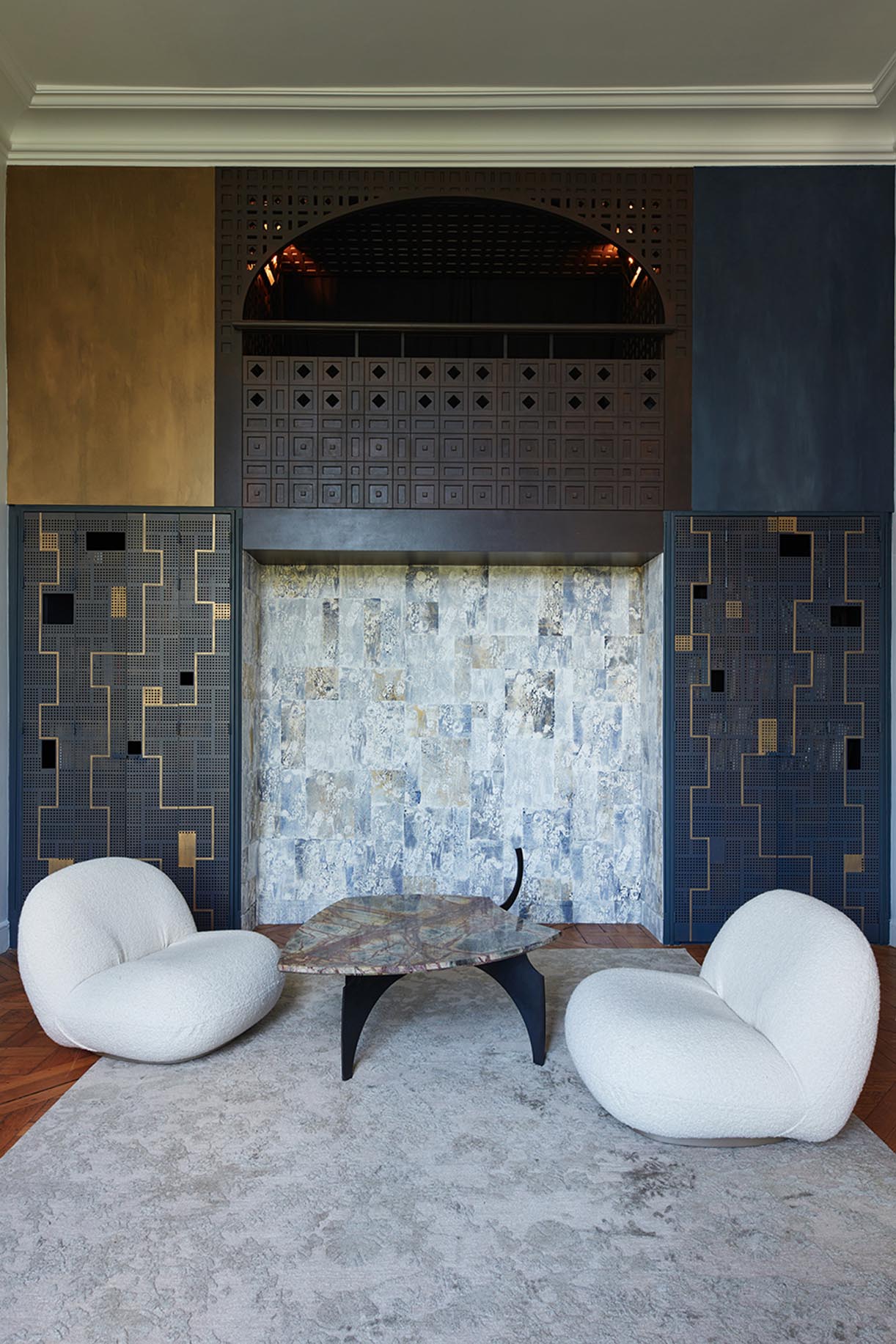
In Gabrielle Regnault’s work, everything is guided by material—her materials. Trained as a decorative painter, she honed her craft through early projects with Pierre Bonnefille, where she explored relief, volumes, and colors, leading to her first creations for Christian Liaigre. Delving deeper into the art of coatings, she engraves in hollow, sculpts in relief, and now, in her own workshop, offers organic, dreamlike, and refined décors, sometimes enhanced with gold leaf. Her technique is applied directly to walls, on assembled panels, and even on objects such as headboards, wardrobe doors, and lighting fixtures.
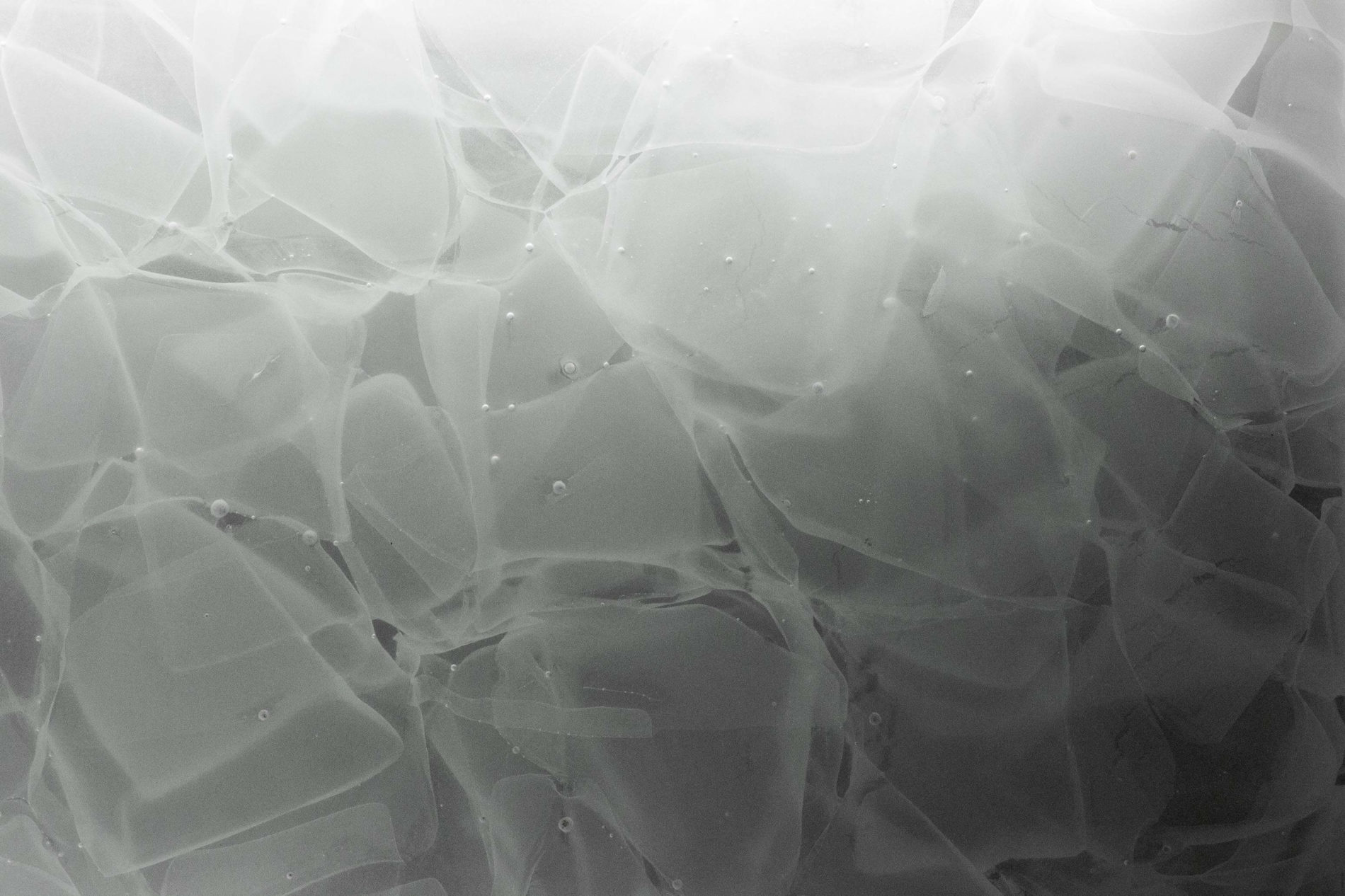
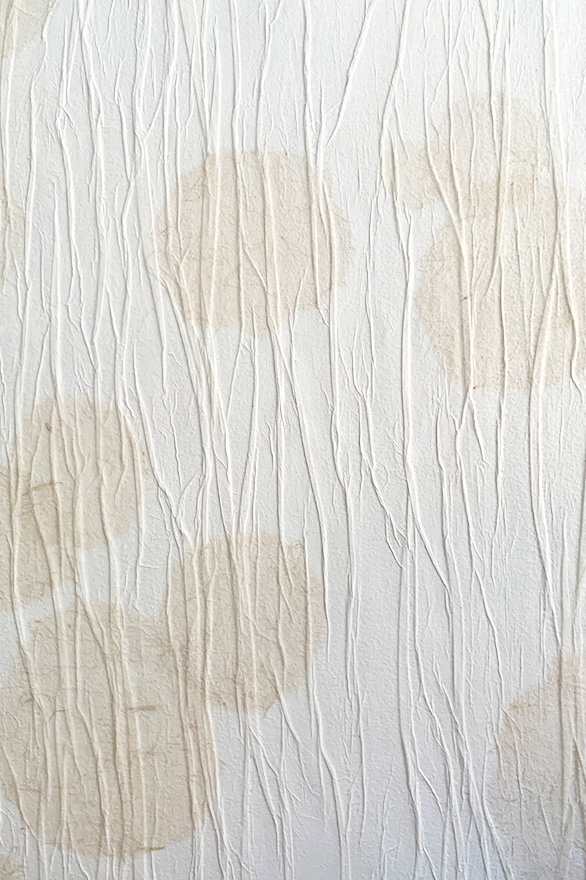
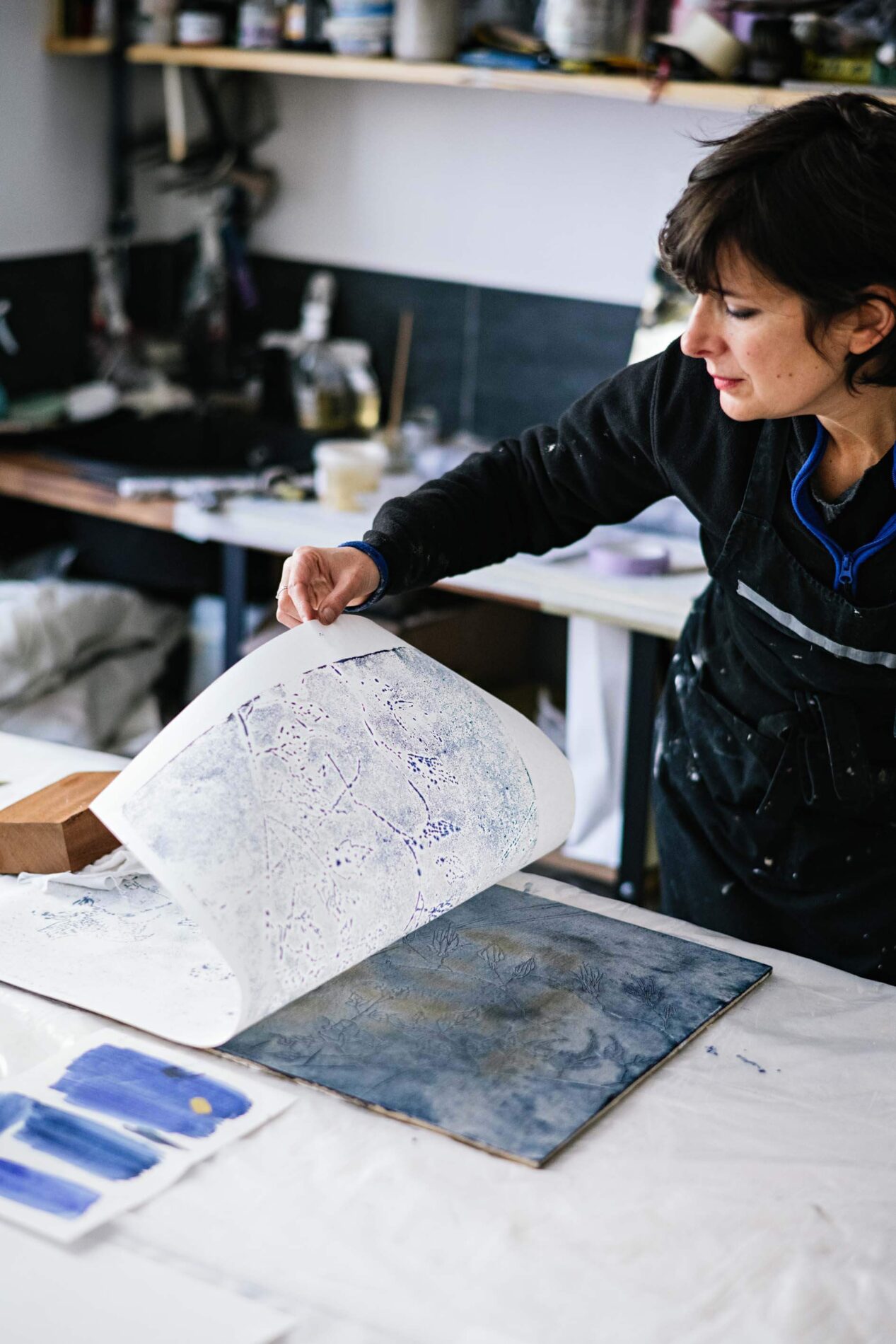
This three-dimensional approach, this ongoing dialogue with matter and form, took a new direction when she discovered washi, a traditional Japanese furnishing paper, during a project by Kengo Kuma in Japan. Back in France, she began inking her plaster plates directly and pressing her new medium onto them—the smooth, flat surface of paper. The plates thus became printing matrices for unique impressions, akin to an inverted block print, where the final outcome is the delicately imprinted paper itself.
Printed décors on washi and hanji:
A dialoguebBetween ink and fiber
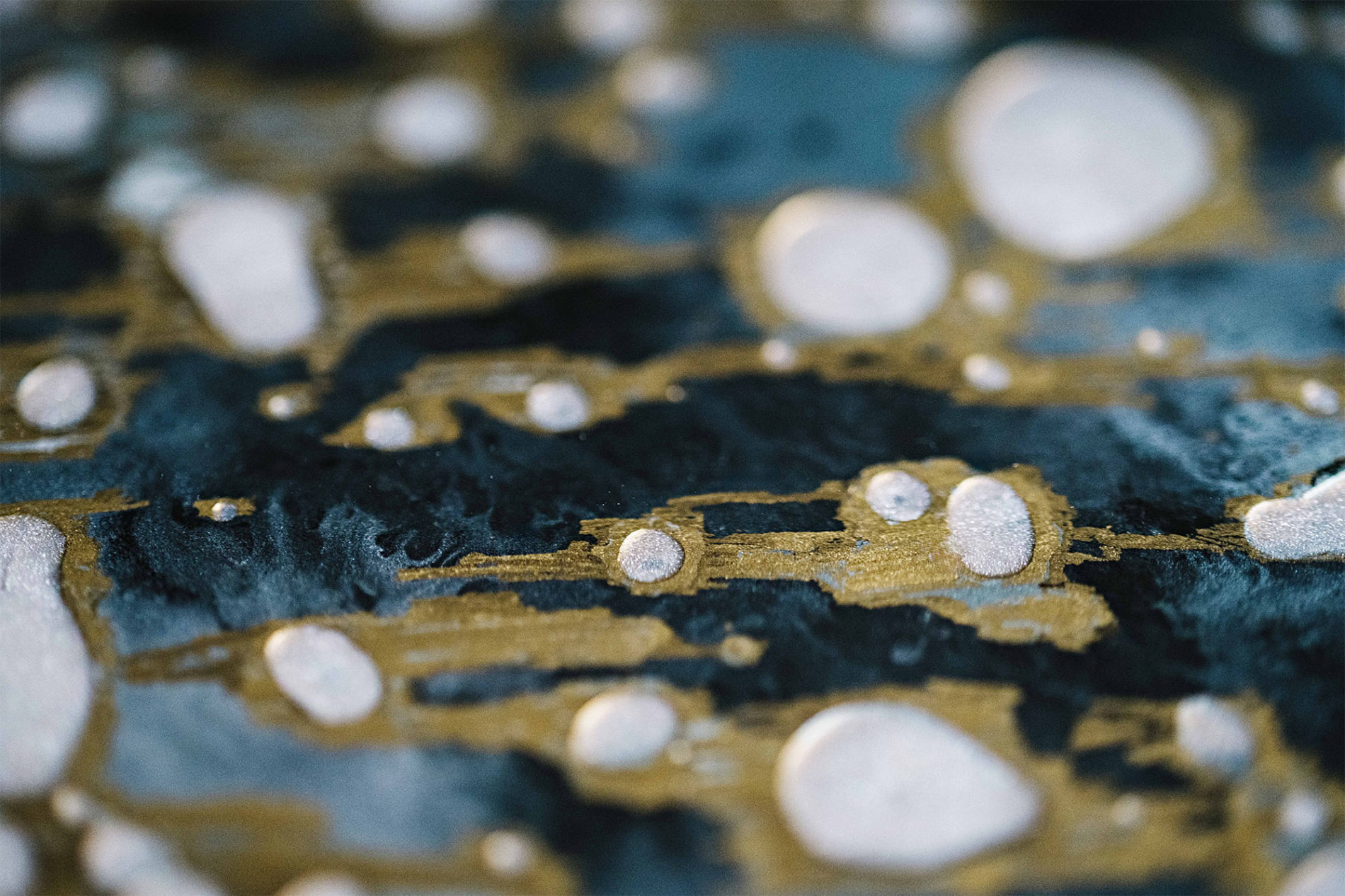
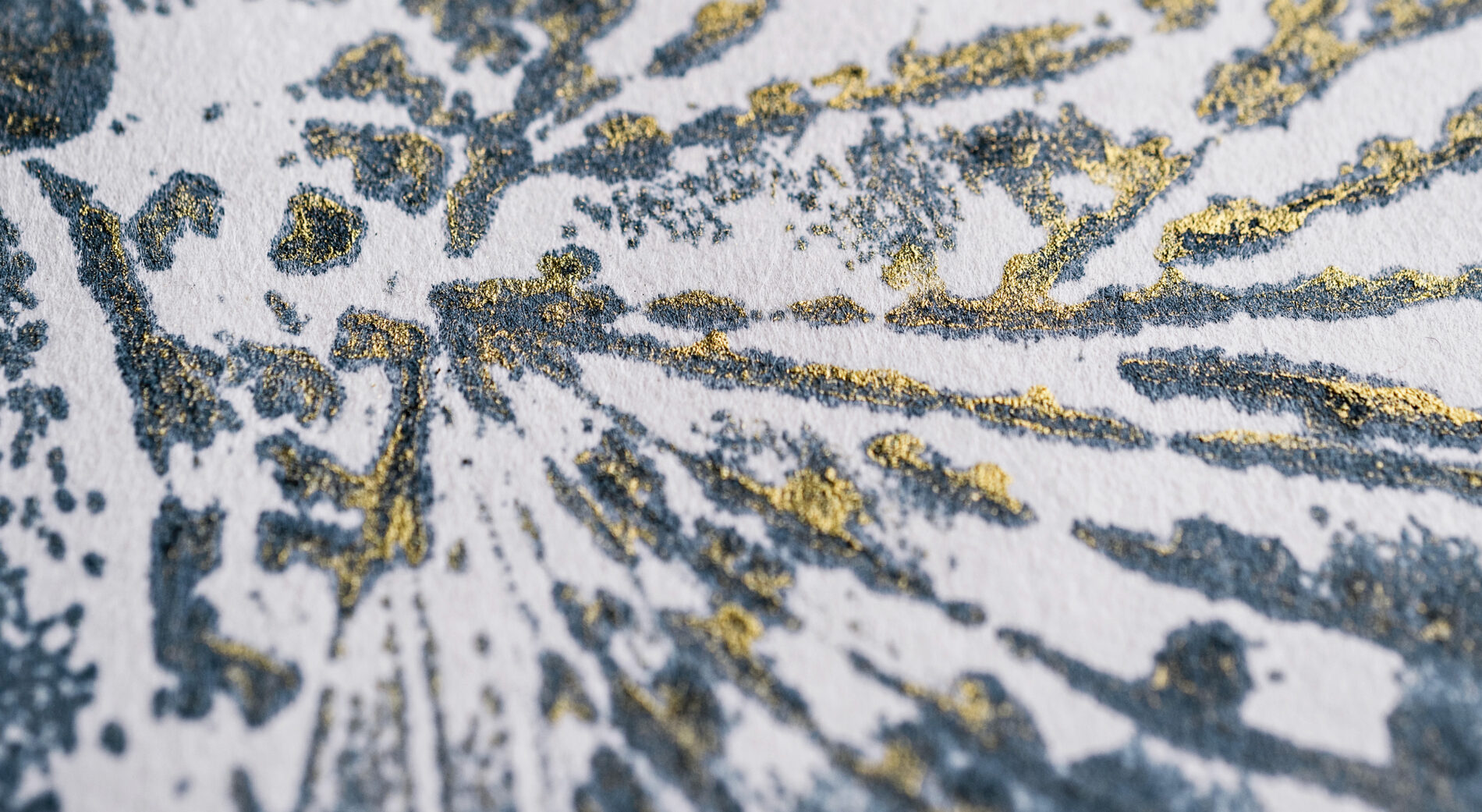
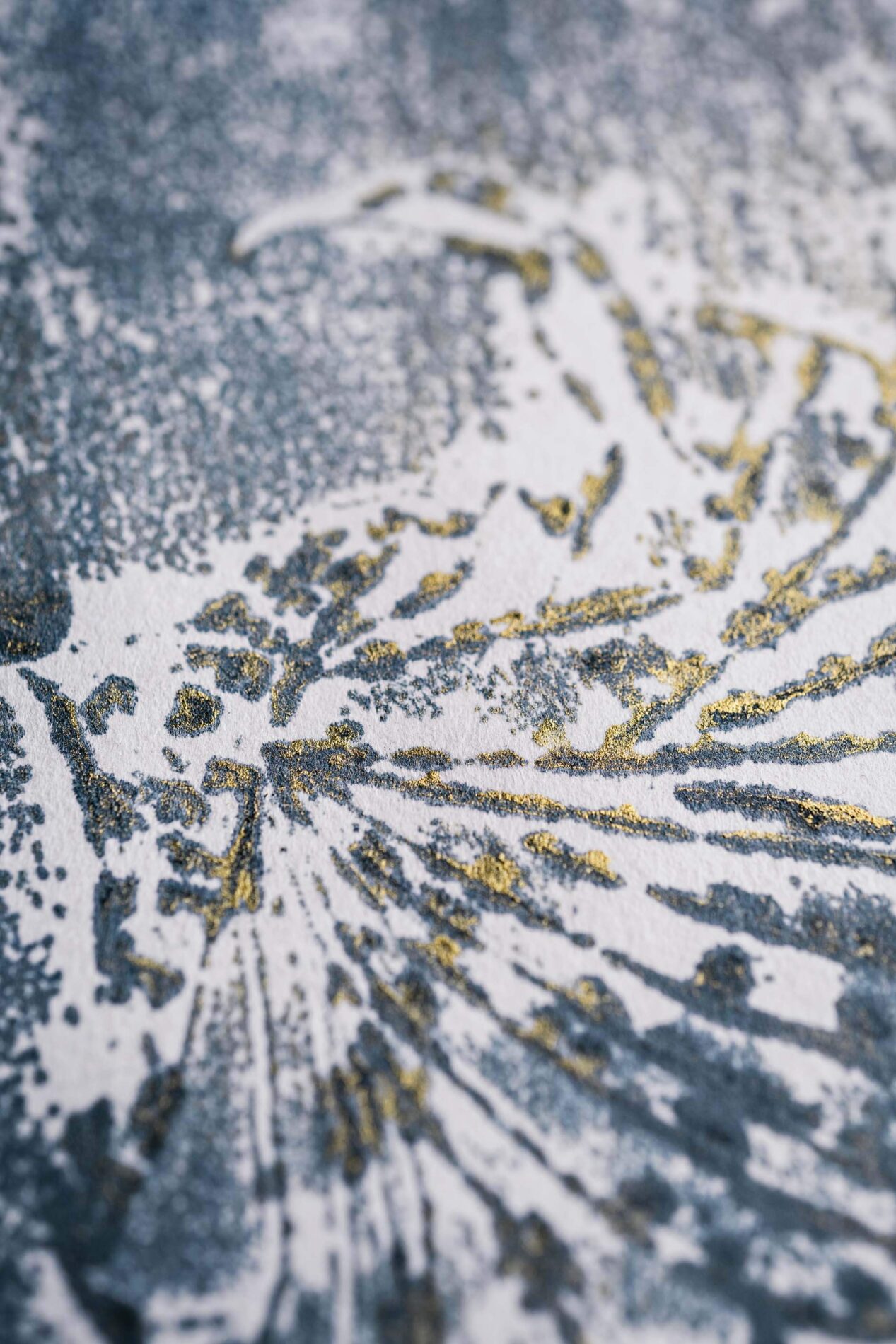
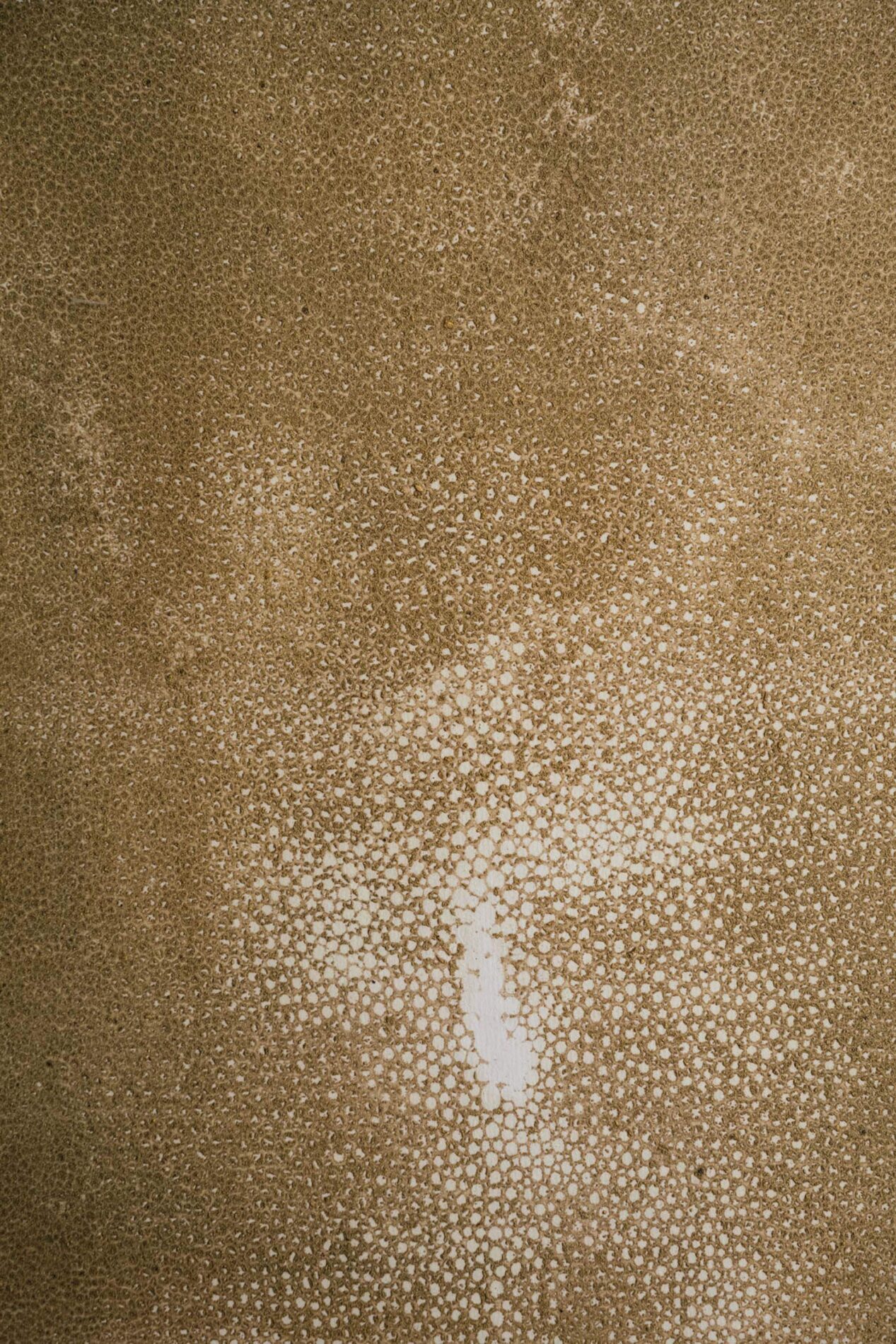
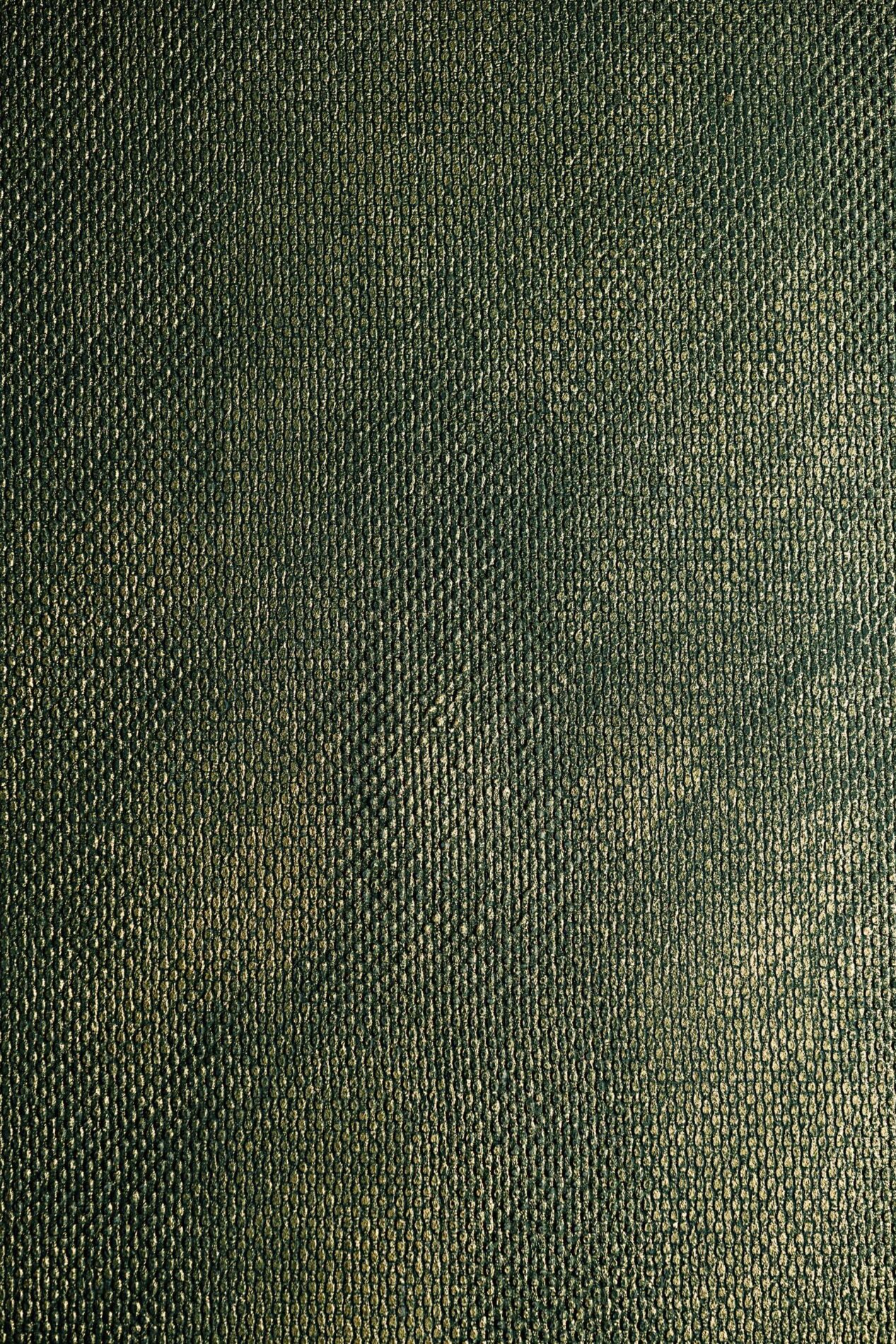
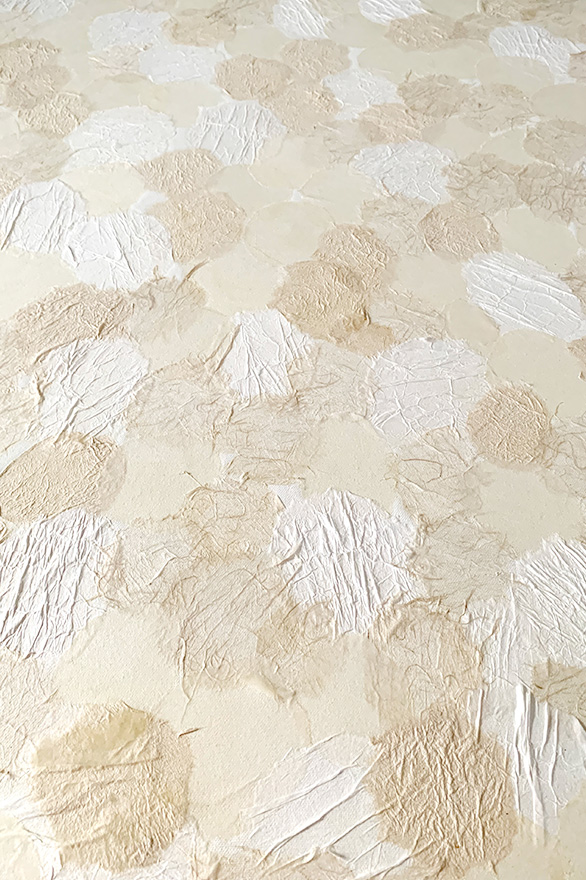
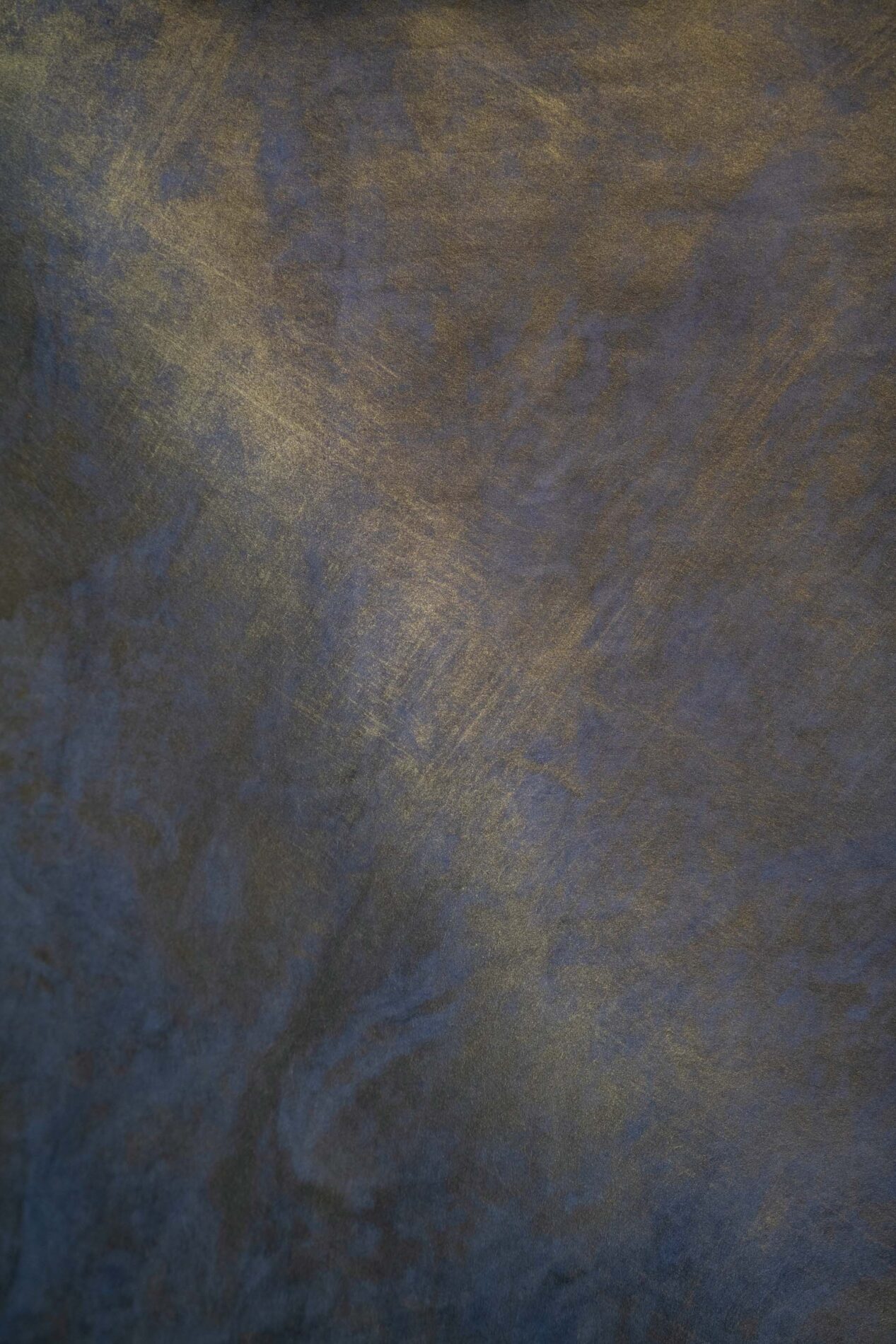
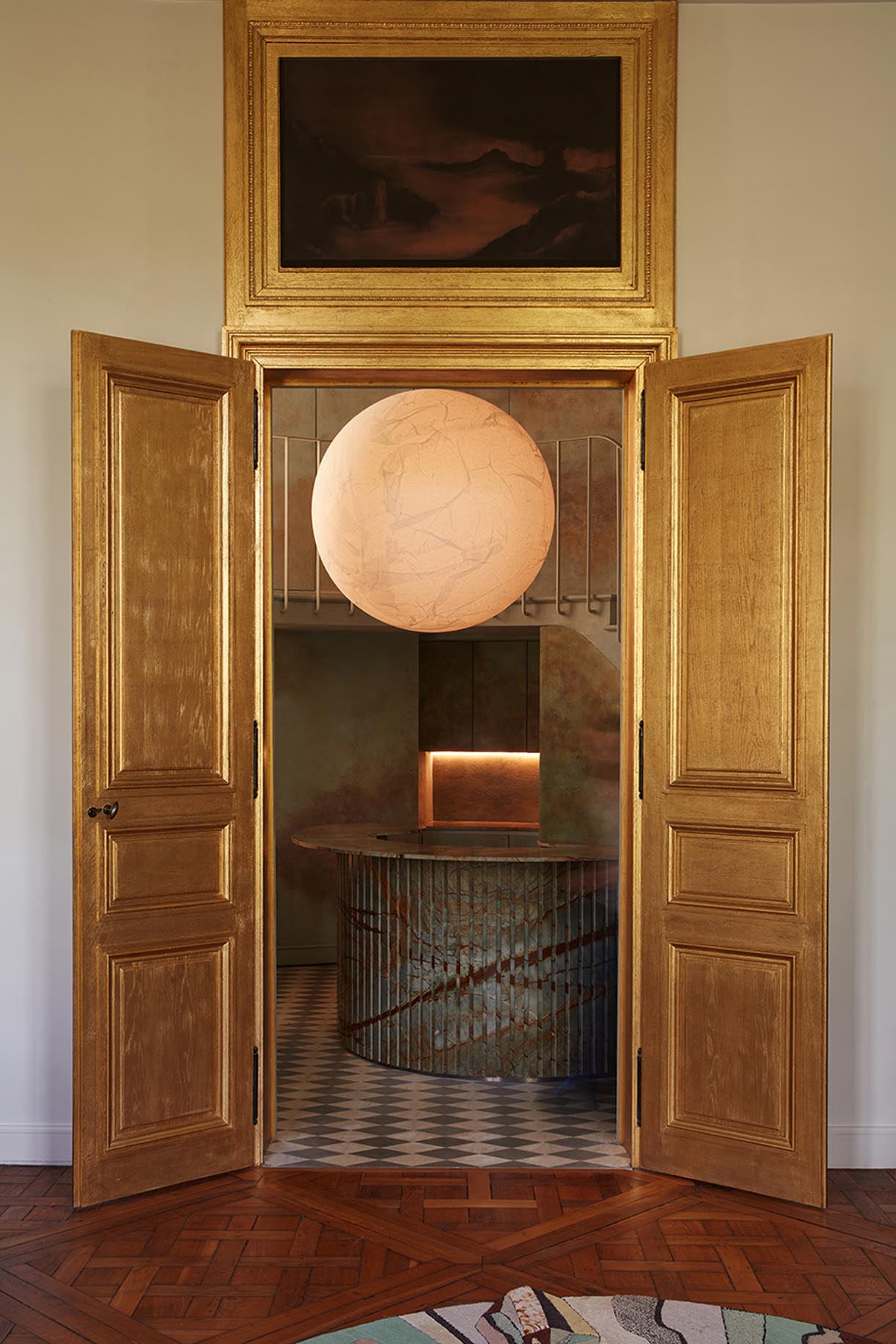
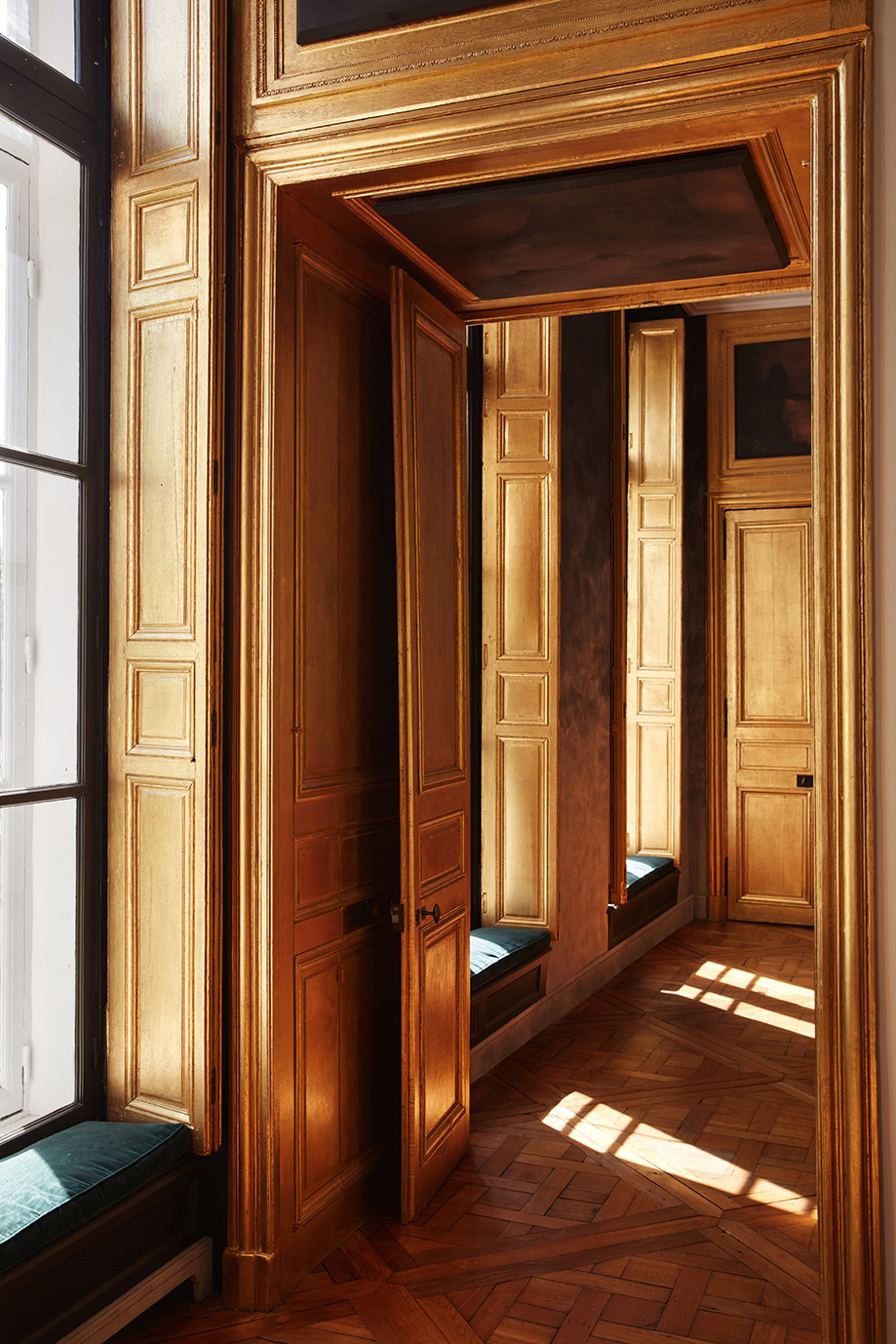
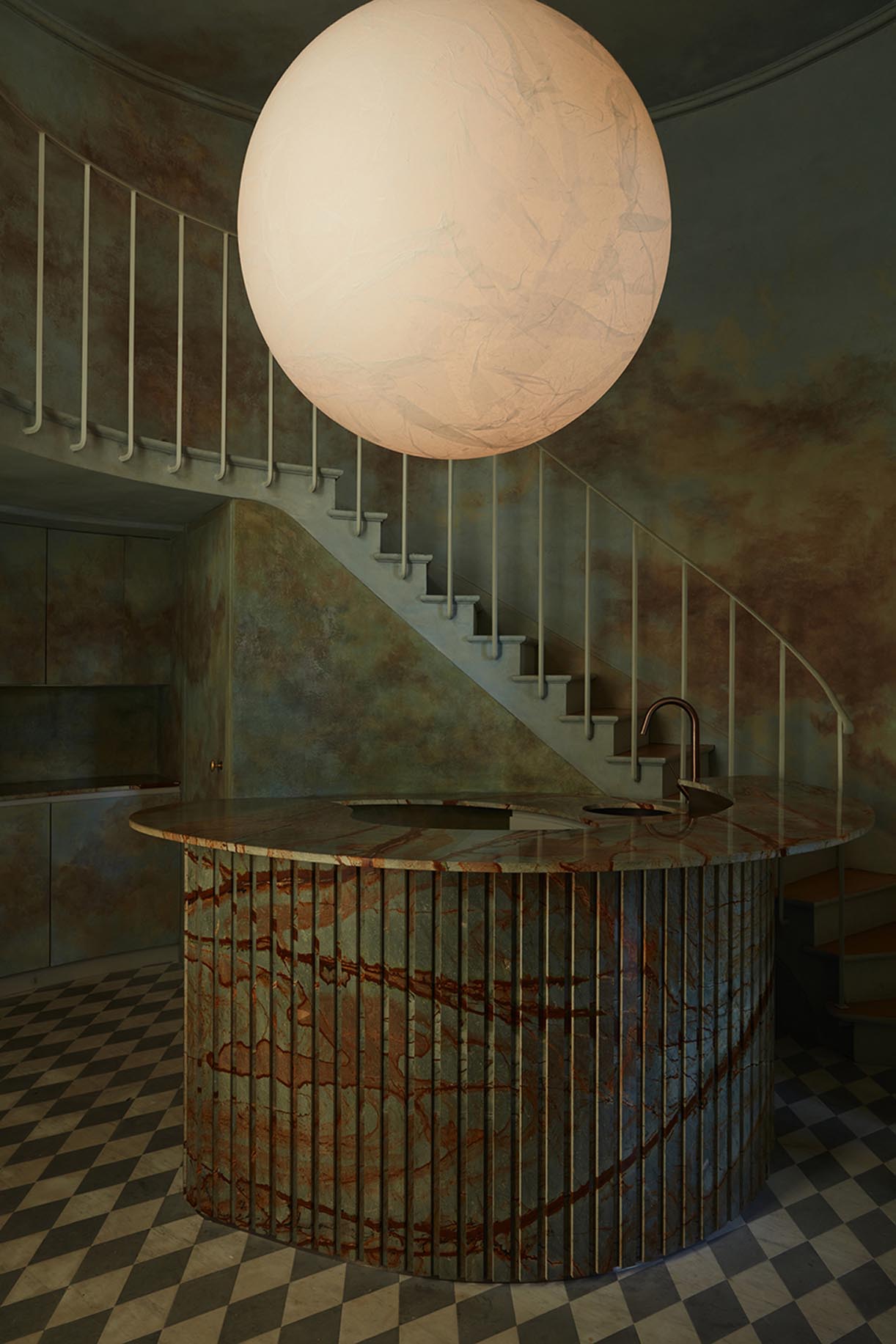
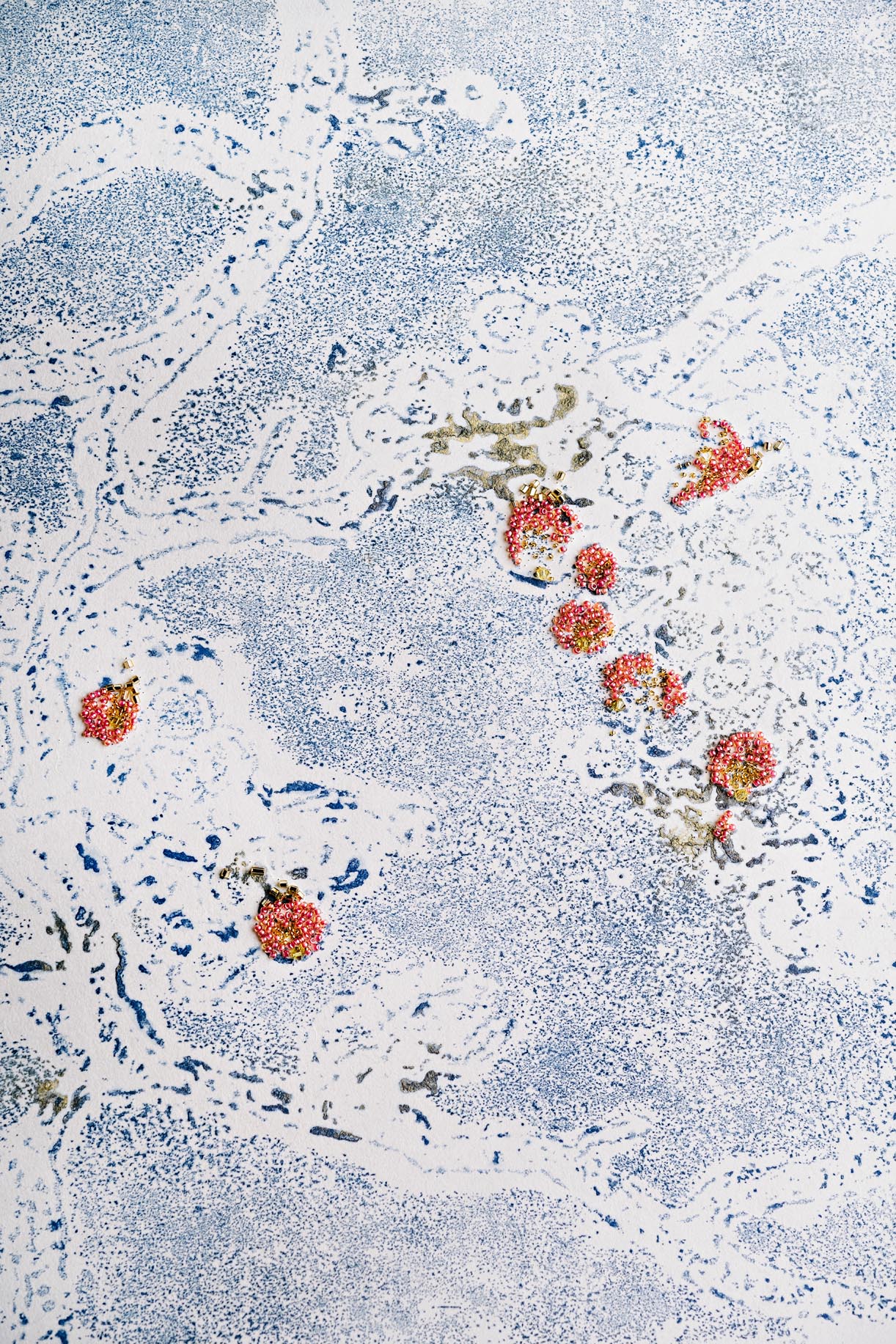
Since 2023, Gabrielle has also been exploring hanji, the traditional Korean paper. Both hanji and washi are exceptionally strong yet remarkably delicate materials. Sculpted plates, coated with inks handcrafted in her workshop, enable a meticulous transfer onto paper, with each print yielding a unique effect influenced by the paper’s weave, the ink’s density, and the pressure applied during printing.
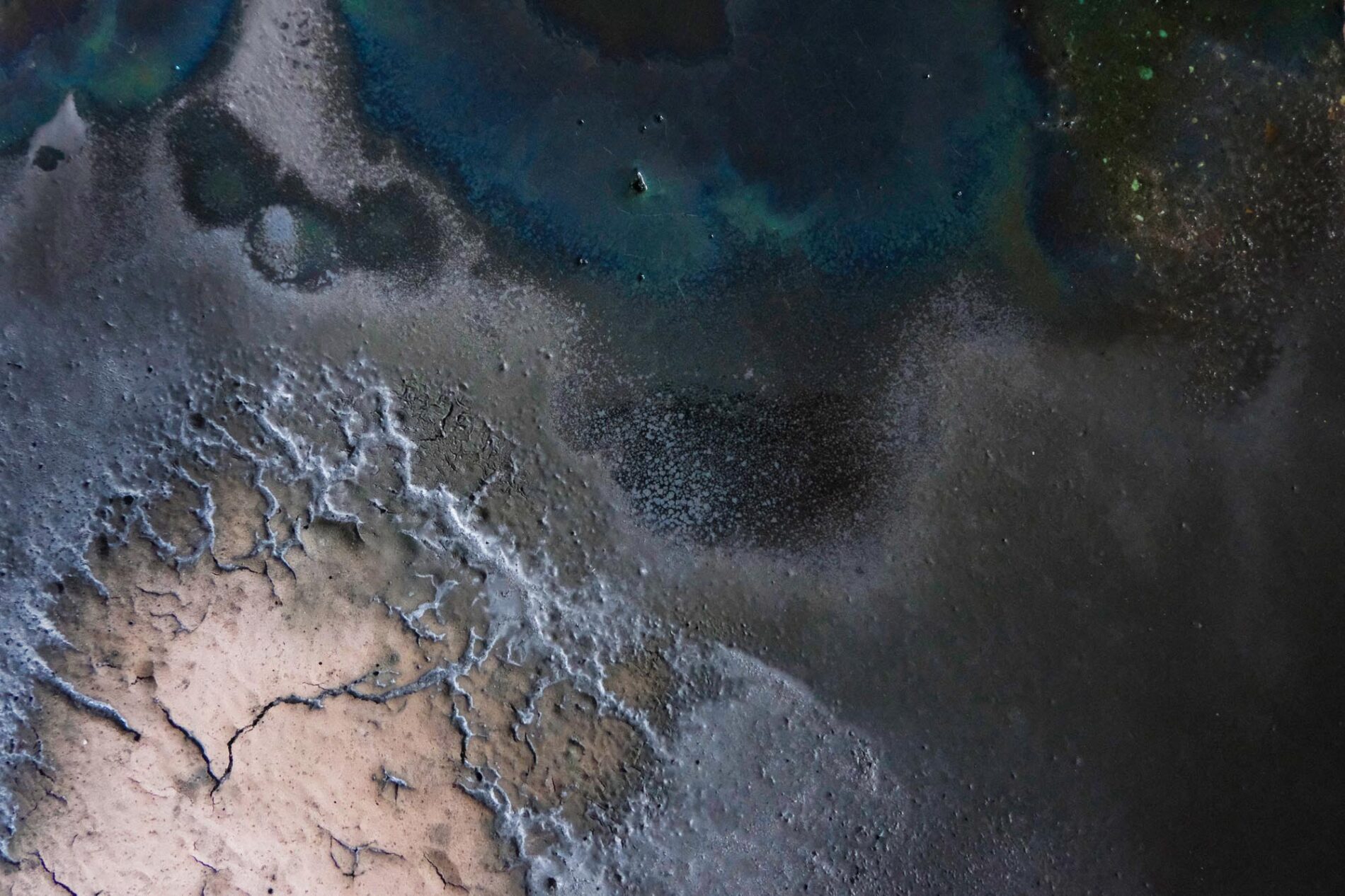
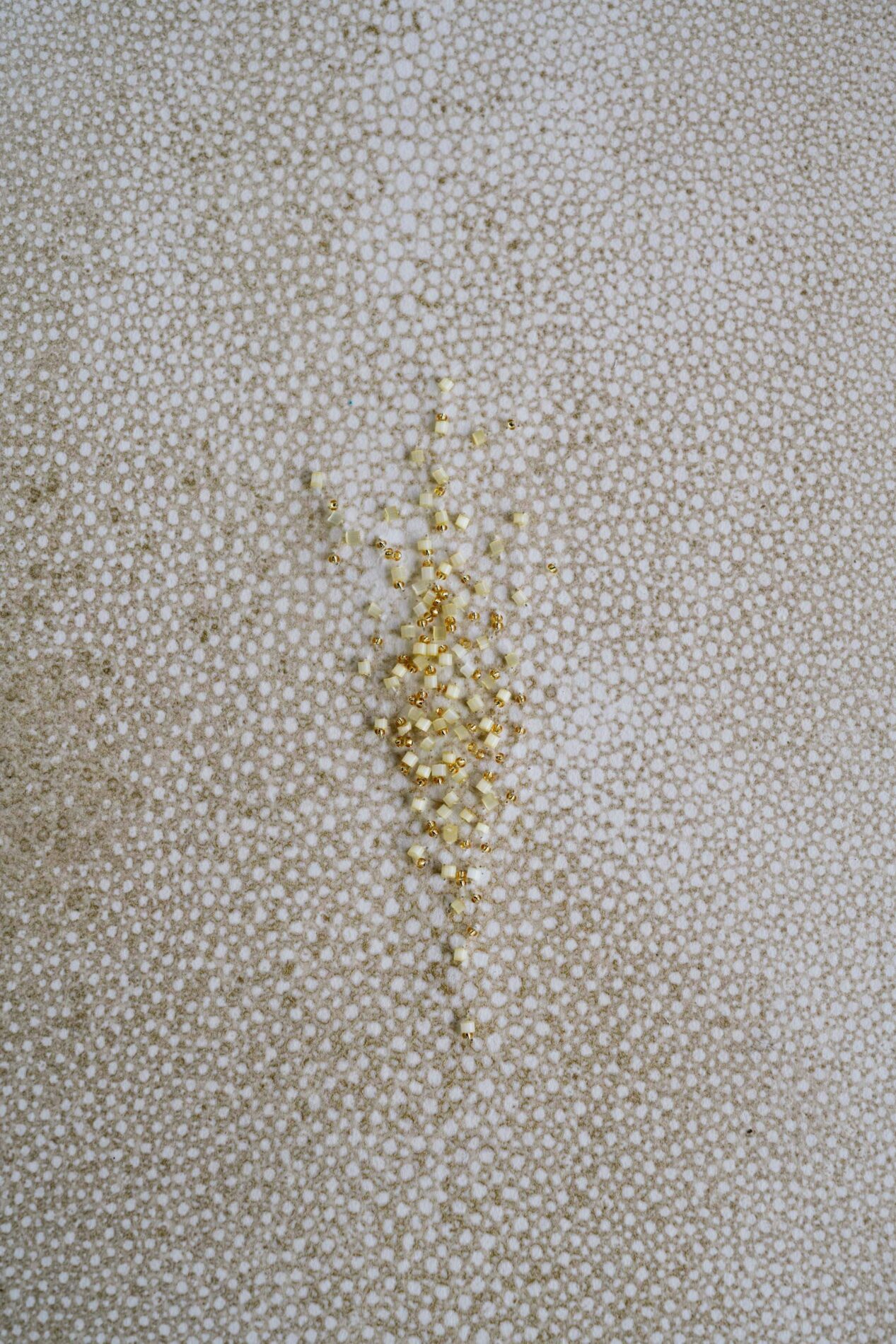
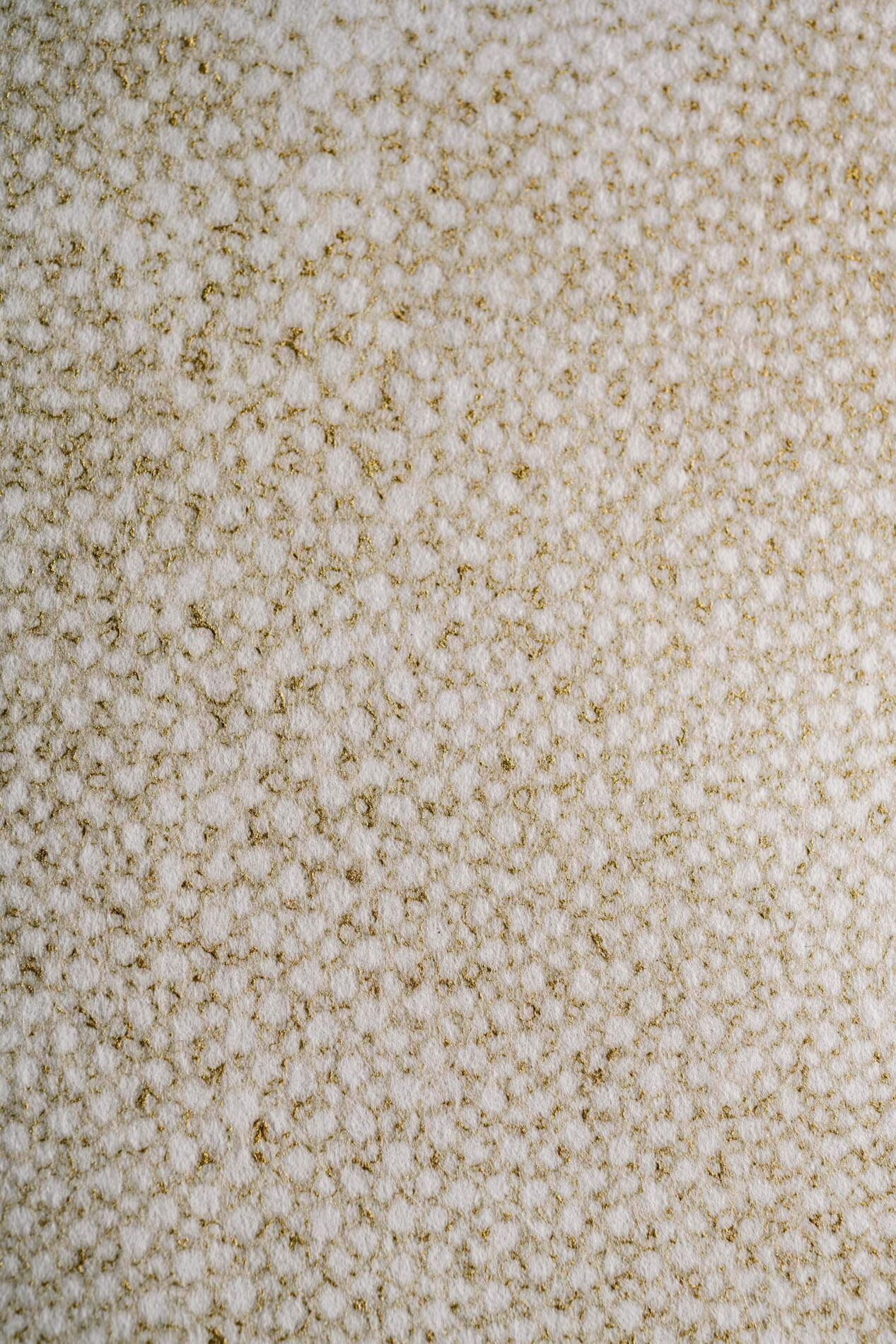
The pigments settle into a myriad of dotted patterns that weave through the fibers, creating organic compositions, some reminiscent of shagreen. Each domino and each texture tells a unique version of the original motif and story defined by the engraved plate. Used as isolated domino panels, triptychs, or series, these papers allow for endless combinations of patterns and shades.
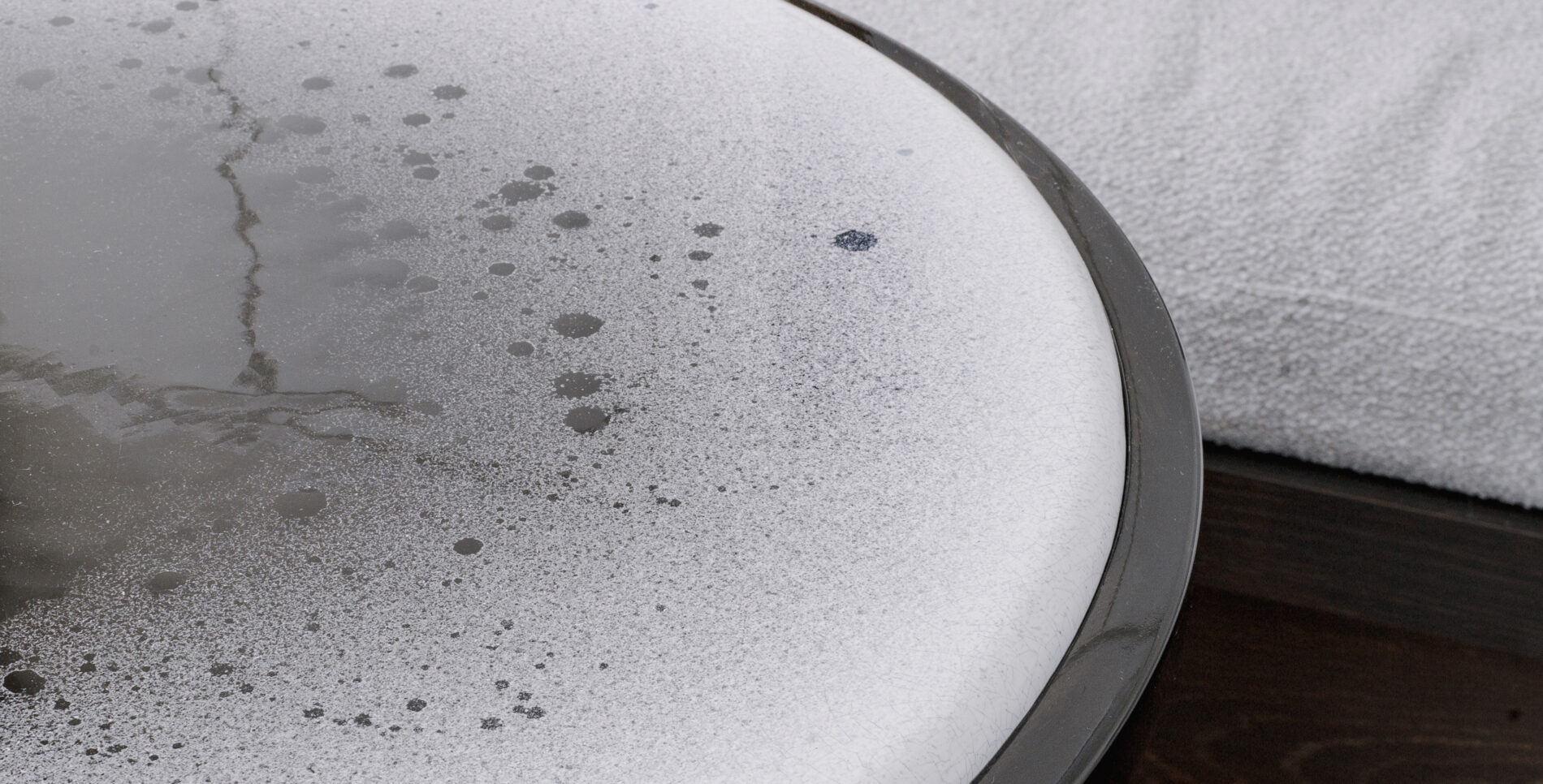
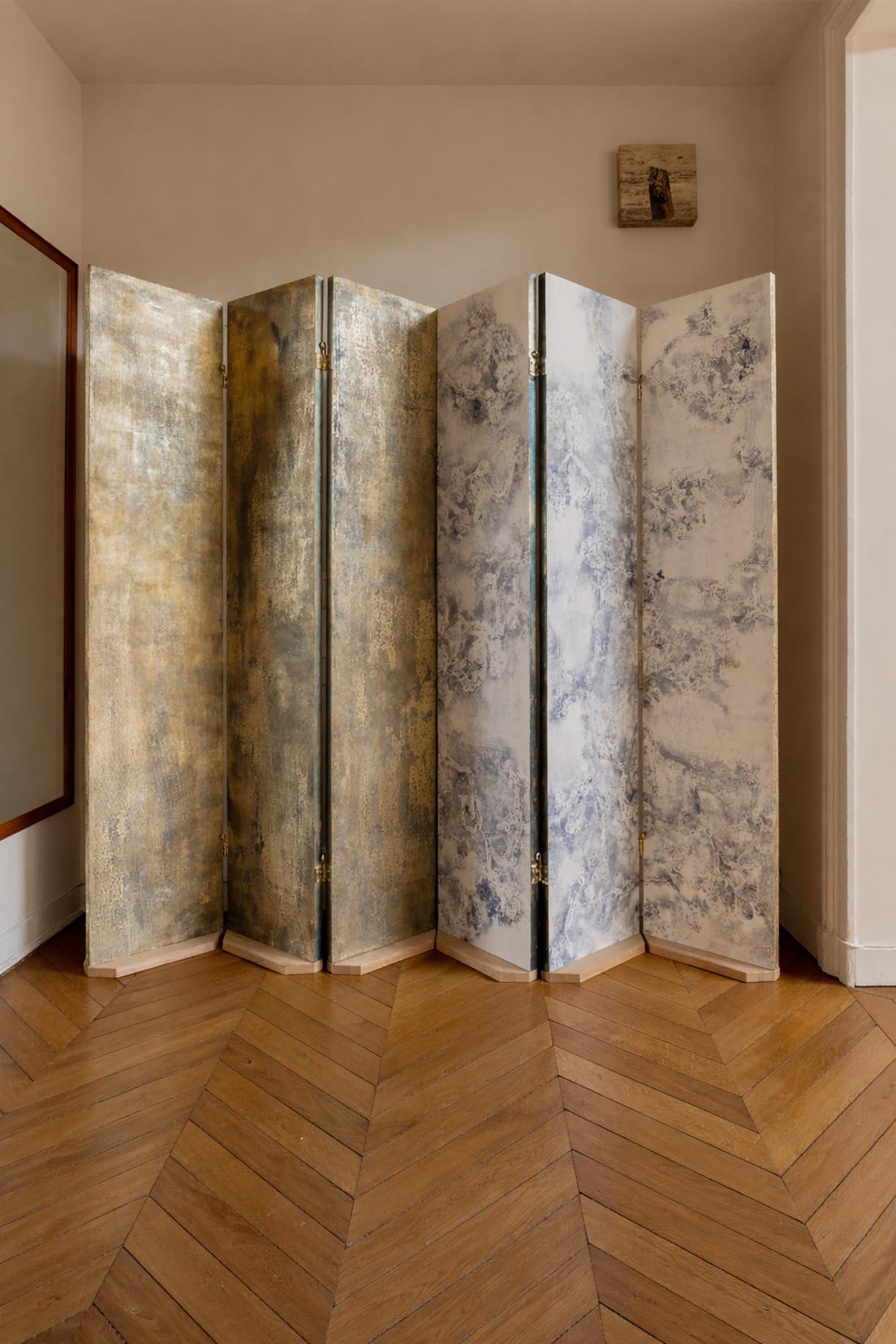
This technique frees Gabrielle Regnault from the vertical constraints of traditional wallpaper formats, allowing her to design wall compositions tailored specifically to each project. These creations, crafted on a material that is both sensorially delicate and functionally durable, adorn not only walls but also chair backs, doors, headboards, and screens. They can also be used to conceive unique series of lighting pieces, harmonized through their shared matrix, elevating these functional objects to the realm of art.
The precious object-decors:
Embroideries, cut-outs, and three-dimensional dips
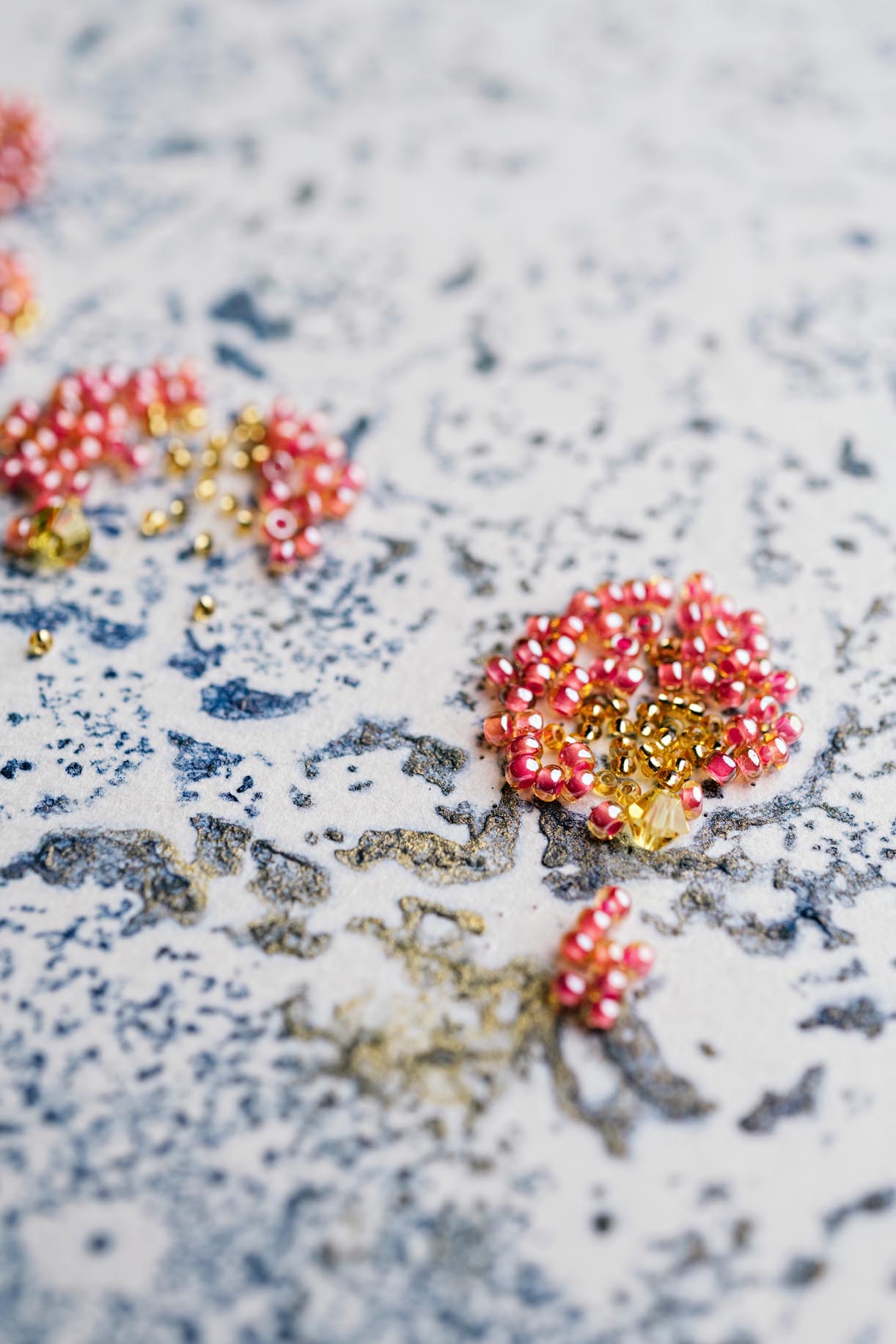
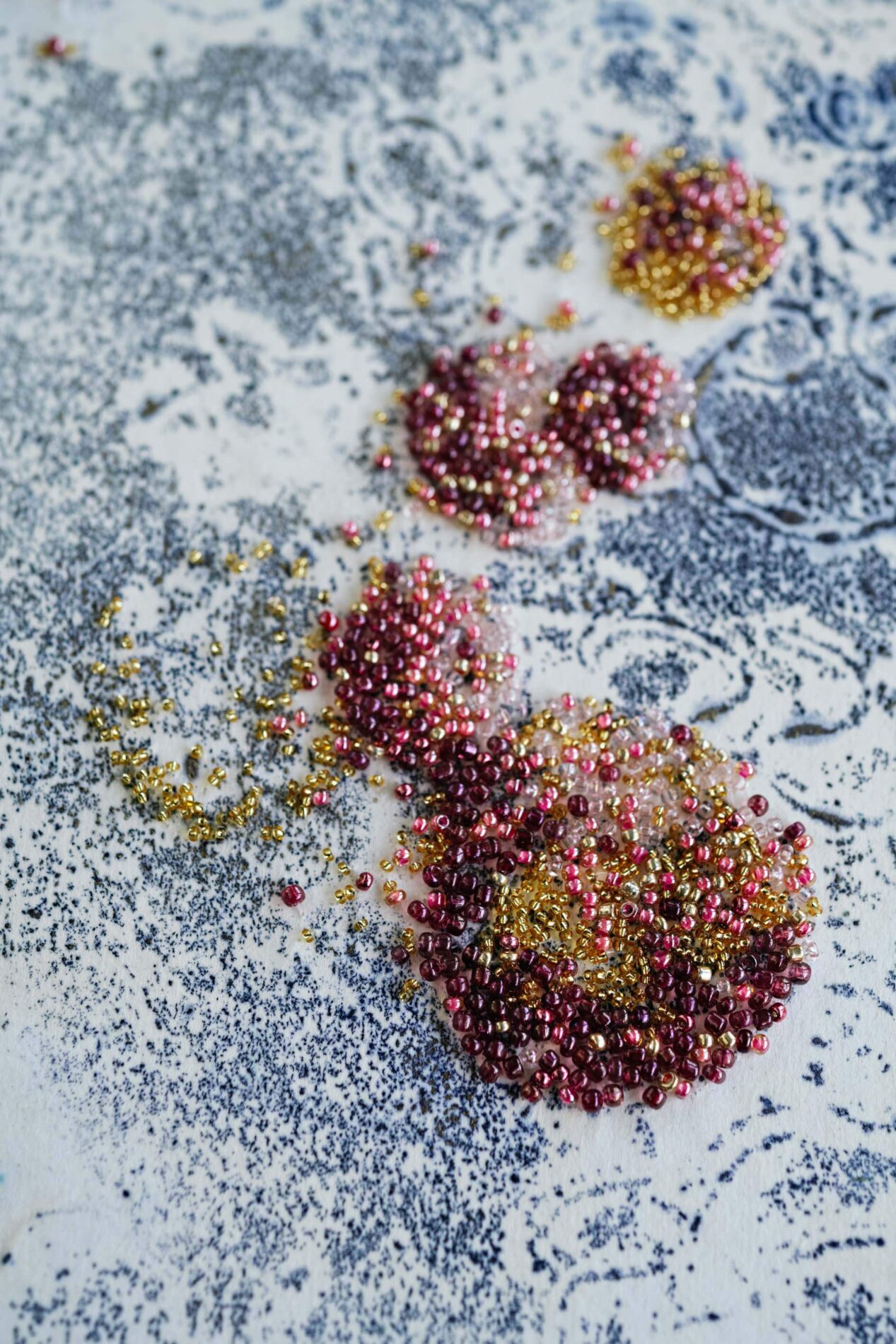
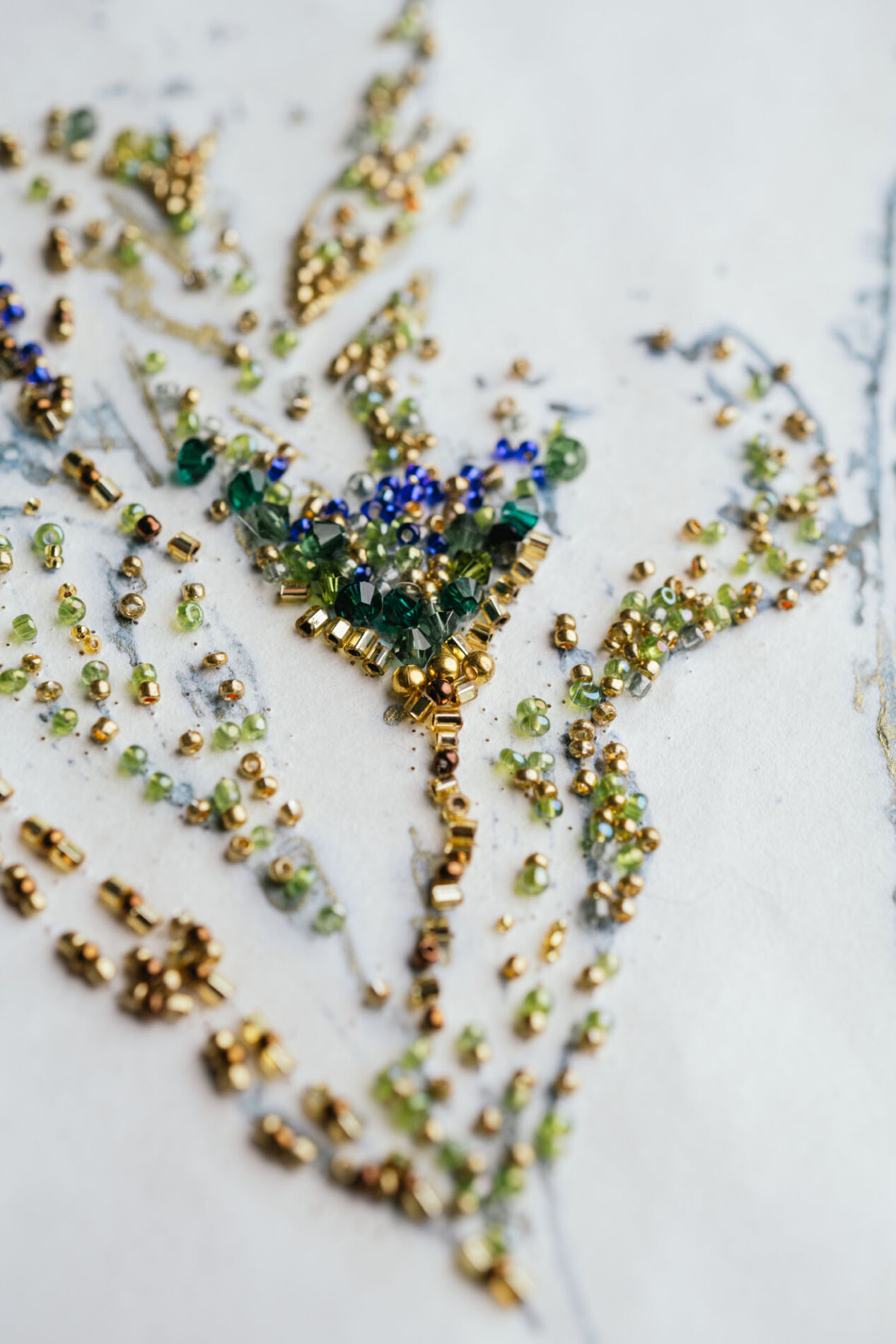
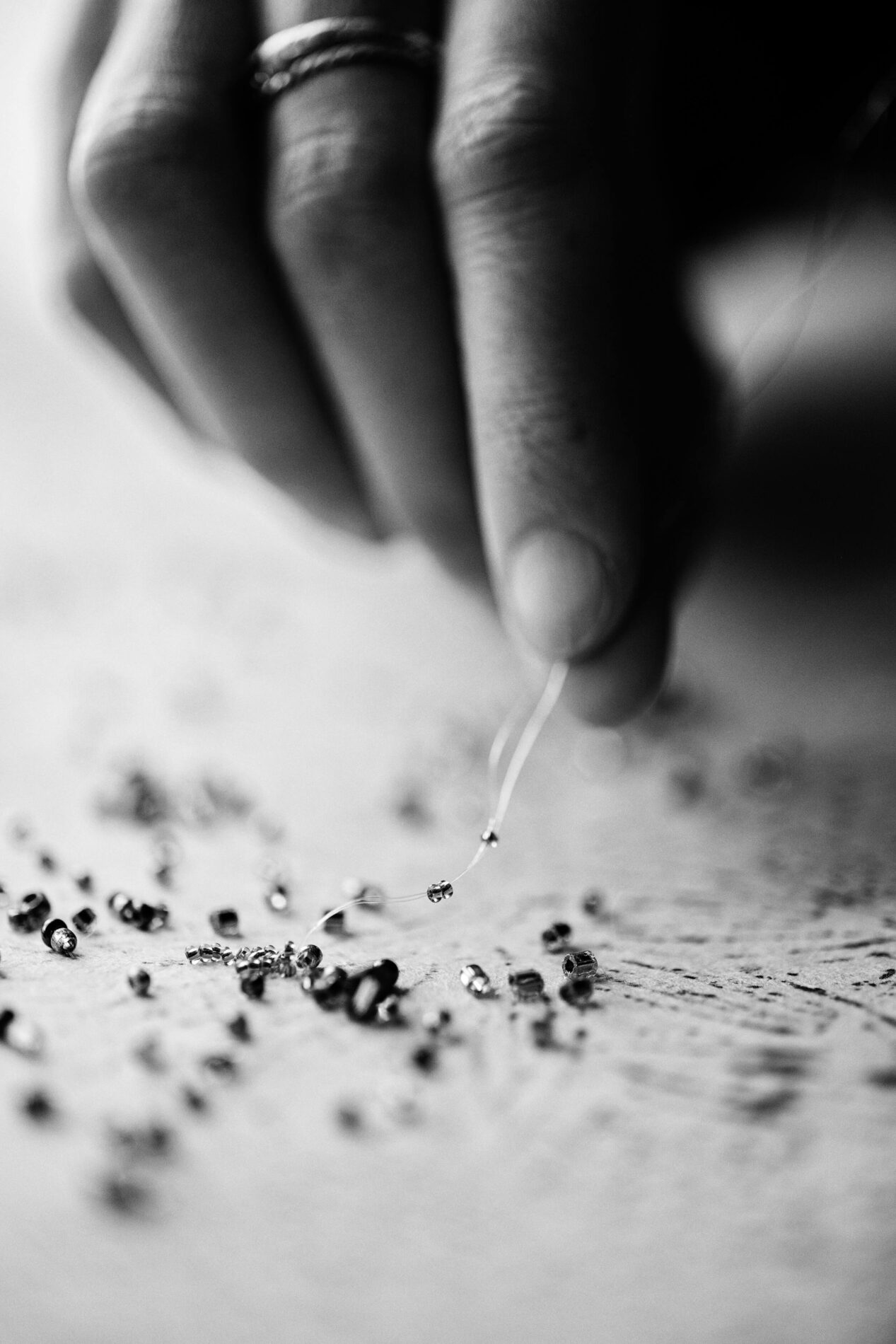
Beyond her bas-reliefs, engravings, and hand-printed papers, Gabrielle Regnault offers “object-decor” pieces—true decorative and ornamental artworks. These creations bring into resonance the ink’s dotted patterns with crystal and glass bead embroidery, restoring volume to paper in a spherical cohesion. The robustness of the paper, paired with the delicacy of the embroidery thread, so fine that it is nearly invisible, combined with the mounting on a support, allows these precious papers to adorn walls, doors, and screens.
Continuing with her exploration of three-dimensionality, the artist presents compositions made from the leftover fragments of her printed papers. These pieces are cut, braided, and worked like leaves or feathers, later integrated into wall works—or even monumental scenographic compositions—for event decoration or ephemeral projects, giving paper a second life. The lightness of these compositions causes them to react and move with the slightest breath of air, creating dreamlike and poetic atmospheres, as seen in the piece presented at the 2023 Révélations Biennale in Paris.

To adapt a sample to a given,
fixed surface. To grant it freedom,
to endow it with meaning and movement, so that the creation
is not merely aesthetic, but alive.
A tailored approach serving
architects and designers
Gabrielle Regnault’s work is situated in the world of luxury and high-end decoration. She collaborates with architects and interior designers to create pieces that seamlessly integrate into the spaces they envision. In 2024, she will design wardrobe doors and a dining room decor in Marrakech for Clémentine Vidal Laury, and in 2025, she will create a bas-relief for a project by Stéphanie Coutas in the south of France. She welcomes her clients to the Jules et Jim showroom on Rue Thérèse in Paris, where they can discuss their projects amid samples from her material library.
Projects may stem from a specific idea or the architect’s needs (wall coverings, furniture, ornamental pieces), or from a more open inspiration. In all cases, Gabrielle begins a research process: sketches, models, and samples are created to refine the final composition. Once the artistic concept is defined, and depending on the nature of the project, the creation is either done on-site (with timelines dependent on the progress of the construction) or on panels in the workshop, which are later assembled. This flexibility allows her to work in parallel with the architectural process while respecting the requirements of complex projects.
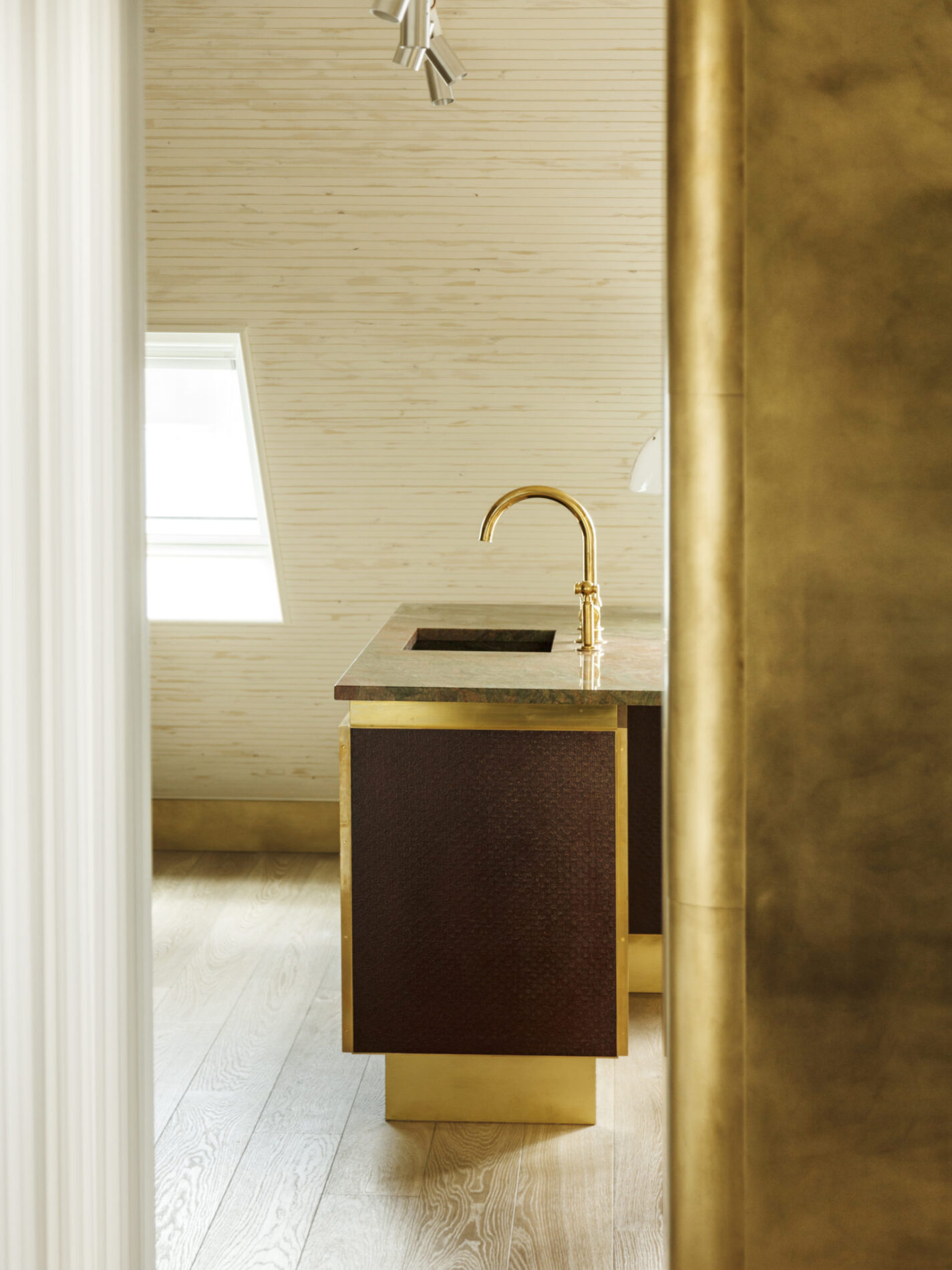
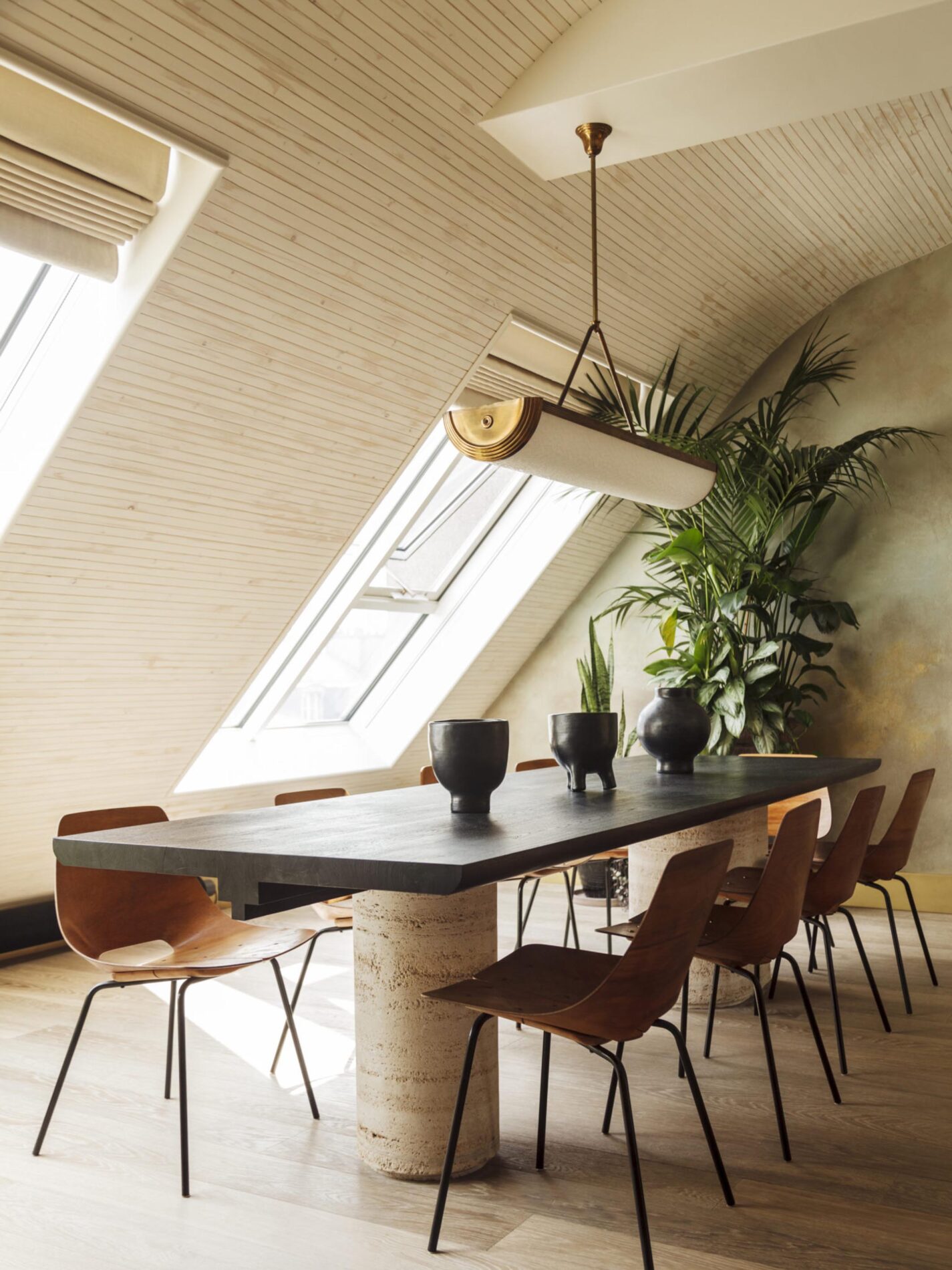
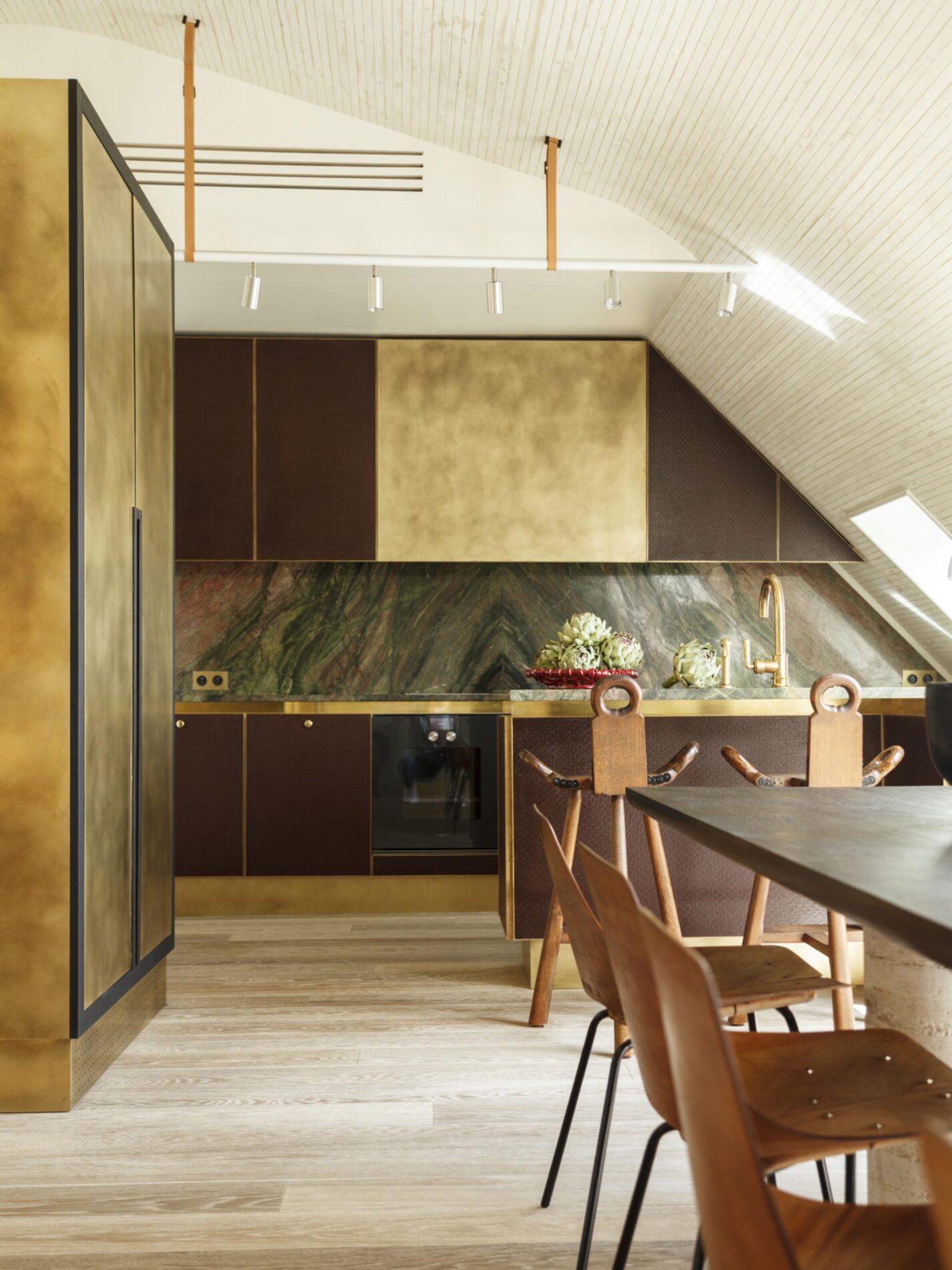
LEARN MORE
Frequently Asked Questions
Sous quelles formes peuvent être réalisés les décors à l’enduit ?
Les décors à l’enduit peuvent être réalisés directement sur site ou préparés en atelier pour être installés sur des panneaux sur mesure, du mobilier ou des toiles prêtes à être mises en œuvre. Pour les projets situés à Paris, l’installation des panneaux peut également être assurée par notre atelier.
Les décors à l’enduit peuvent-ils être intégrés dans des environnements humides ?
Oui, les décors à l’enduit peuvent être appliqués dans des pièces humides, à condition de ne pas être en contact direct avec l’eau. Les créations revêtues de feuille de cuivre ne sont en revanche pas adaptées à ces environnements en raison du risque naturel d’oxydation du métal.
Quels formats proposez-vous pour les papiers imprimés sur mesure ?
Les papiers imprimés sur mesure peuvent être réalisés en lés classiques de 97 cm de largeur, sans limite de hauteur, ou à la feuille pour les projets de dominos.
Ils s’adaptent à de nombreux usages en architecture intérieure et en agencement : panneaux décoratifs, mobilier, paravents, tableaux ou dispositifs scénographiques sur mesure.
Quelles solutions techniques proposez-vous pour les projets professionnels ?
Nous proposons des solutions adaptées aux espaces professionnels et recevant du public grâce à des papiers contrecollés sur toile avec traitement ignifuge M1. Pour les projets nécessitant des effets de transparence ou des usages spécifiques, nous travaillons avec un partenaire japonais développant des techniques d’encapsulage du papier en PVC, permettant des applications sur mesure selon les contraintes du projet.
Quelle est la résistance des papiers utilisés ?


Crédits : ©Franck Juery

A specific project? Let’s talk
Every project deserves individual attention. Whether it’s a custom development, a specific project,
or a request for samples, contact us to share your project, your constraints, or your inspirations.
We would be delighted to discuss with you and connect you with Gabrielle Horn Regnault.